

A rack of Blackwell GPUs costs $3.1 million. The number lands differently when you understand that the silicon doing the actual computing — the logic die, the transistors switching billions of times per second — is no longer the most expensive part of what you are buying.
The memory is.
In NVIDIA’s B200, the high-bandwidth memory stacked alongside the processor now accounts for a larger share of the bill of materials than the compute die itself. SemiAnalysis’s benchmarking analysis of the GB200 NVL72 makes the structural shift legible: the GB200 draws 1,200 watts per chip versus 700 watts for the H100, a system whose cost and thermal envelope are shaped less by how fast it thinks than by how much it can remember, and how quickly. That inversion — memory over compute — is not a footnote in the spec sheet. It is a realignment of who wins and who quietly exits the industry.
The losers are not the companies you see onstage at GPU Technology Conference. They are the mid-tier cloud providers, the university research clusters, the sovereign AI programs in countries that cannot absorb a $3.1 million entry ticket per rack, and the entire class of startups that built their unit economics on H100 rental rates. All of them made plans inside a model of AI chip economics that has since been replaced without their input.
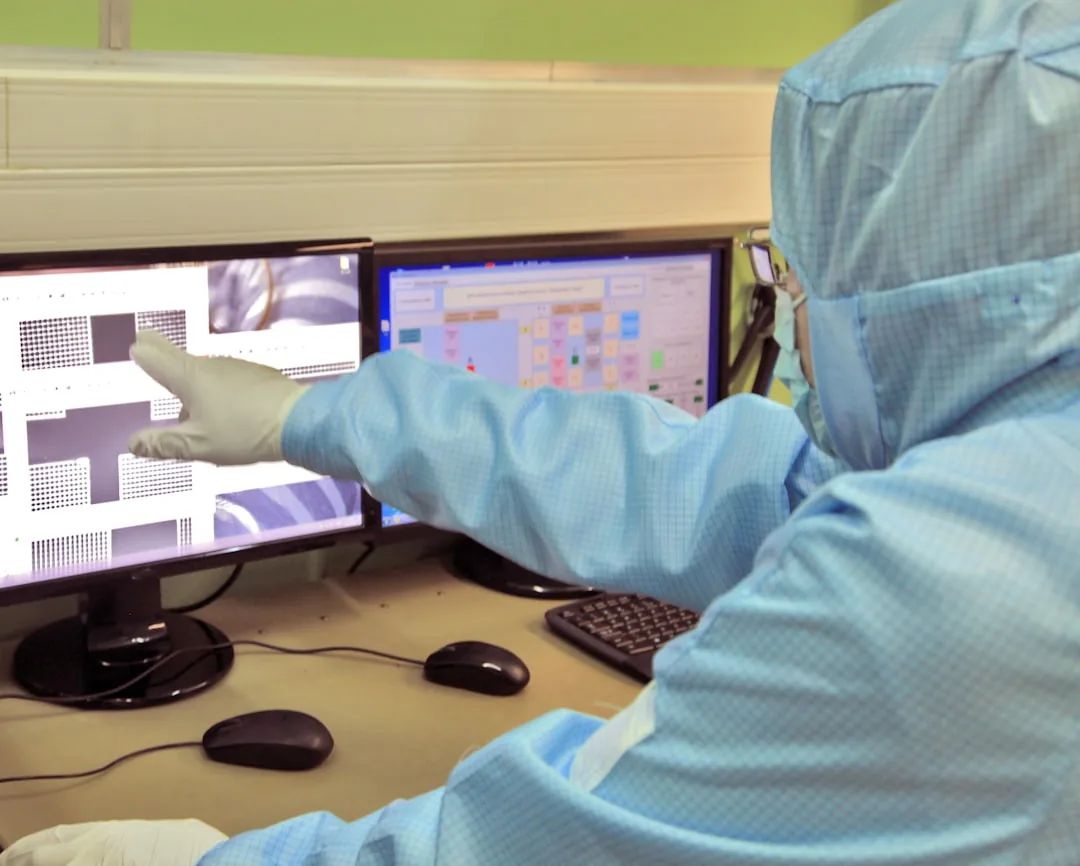
The Moment HBM Became the Product
High-bandwidth memory was always expensive. What changed is the ratio. The H100 carried roughly 80GB of HBM3 across five stacks; the B200 ships with 192GB of HBM3e. That is not a marginal upgrade — it is a statement that the bottleneck NVIDIA is solving for is no longer raw floating-point throughput but the speed at which weights can be fed to the processor during inference. The H100 costs around $25,000 per unit; the GB200 rack lands at approximately $3.1 million, a price that embeds not just more compute but a fundamentally different memory architecture requiring packaging complexity — CoWoS-L interposers, through-silicon vias, precision stacking — that only a handful of facilities on earth can manufacture.
SK Hynix, Samsung, and Micron collectively control that supply. Three companies. And because HBM yield rates run materially below those of conventional DRAM, every stack that ships is one that didn’t. The physics of stacking dies with microscopic copper pillars means that scrap is structural, not accidental. Scarcity, here, is baked into the process.
The result is a supplier dynamic that would concern any procurement officer who lived through the 2021 automotive chip shortage. NVIDIA is powerful enough to lock in HBM allocation years in advance. The hyperscalers — Microsoft, Google, Amazon, Meta — have the balance sheets to follow. Estimates of GPU resources held by major AI players suggest the top five organizations now control the vast majority of frontier compute, a concentration that was already striking before HBM scarcity added a second gate to entry.
Everyone else negotiates for what remains.
What $3.1 Million Per Rack Does to a Research Budget
Here is the number that should stop a university CTO mid-sentence: a single GB200 NVL72 rack at $3.1 million costs more than the annual research computing budget of most institutions outside the top twenty. Not the GPU budget. The entire budget. The shift in AI chip economics from expensive-but-accessible to structurally-prohibitive is generational in its implications for who can train original models versus who can only fine-tune what the hyperscalers release.
The gap compounds. An H100 cluster built in 2022 depreciates; its operators hoped the next generation would offer a reasonable upgrade path. Instead, the GB200’s power draw — 1,200 watts per chip — requires data center infrastructure that most existing facilities cannot support without reconstruction. Cooling systems designed for air-cooled racks cannot handle direct liquid cooling at that density. The facilities investment required before the first rack is even purchased runs into the tens of millions. The hardware cost is the visible number. The infrastructure retrofit is the one that ends the conversation.
“We can model the chip cost. We cannot model the building cost until someone actually builds the building.”
— Director of infrastructure, major research university
Sovereign AI programs — government-backed compute initiatives in the EU, India, the Gulf states — face the same wall from a different direction. Political will is present. Capital, in some cases, is present. But HBM allocation is not available to them on a timeline that matches their policy announcements, and no domestic semiconductor program outside South Korea, the United States, and Japan is producing HBM at commercial scale. France can announce a national AI strategy. It cannot announce its own supply of HBM3e.
The Startup That Priced the Wrong GPU
Inference economics were already fragile. Now they are being repriced from the substrate up.
A generation of AI infrastructure startups — inference APIs, model-serving platforms, fine-tuning services — built margin models around H100 rental rates that hovered between $2 and $3 per GPU-hour in 2023. Those rates reflected a supply-demand balance that no longer exists as the industry transitions to Blackwell. The GB200 is not just more expensive to buy; it consumes nearly double the power per chip, inflating operating costs in a market where electricity is already the second-largest line item after hardware depreciation. The AI chip economics that justified certain price points have shifted. The business models built on them have not caught up.
Customers, meanwhile, expect inference to get cheaper as models scale — and in raw capability-per-dollar terms, it does. A GB200 processes tokens at a rate that makes the H100 look considered. But the minimum viable deployment scales upward too. The NVL72 is a 72-GPU rack system; you cannot buy six GB200s and run a lean inference cluster the way operators once ran a handful of H100s. The architecture assumes — and prices in — deployment at hyperscale. That assumption excludes a specific band of operator: too large to use consumer cloud credits, too small to absorb rack-level minimums.
They are the companies the industry stopped building for, without announcing it.
Memory as Moat, Not Feature
The structural read on what NVIDIA has done with the B200 and GB200 is that memory capacity has been reframed from a specification into a competitive moat. Models with hundreds of billions of parameters require memory bandwidth that HBM3e can provide and nothing else currently can at the same density. The implication for AI chip economics is that compute leadership is no longer separable from memory leadership — which means that any challenger chip, whether from AMD, Intel, or a custom silicon program at a hyperscaler, must solve the HBM problem before it can credibly contest the training market.
AMD’s MI300X ships with 192GB of HBM3 — matching the B200 on capacity — but SemiAnalysis’s training benchmarks show the GB200 NVL72 delivering substantially higher utilization on large language model workloads, a gap attributable in part to NVIDIA’s software ecosystem and in part to memory bandwidth architecture. The hardware race and the software race are now the same race. Closing on one front while trailing on the other produces a chip that benchmarks well in press releases and underperforms in production clusters.
Google’s TPU v5 and AWS Trainium2 sidestep the HBM merchant market by internalizing the memory-compute co-design problem. Google’s TPU v6 architecture is designed around memory bandwidth as the primary optimization target, not floating-point operations per second. That framing is correct. It is also available only to organizations that can fund a custom silicon program at scale — which returns the argument, again, to the same short list of names.
Fast. Hard numbers, no softening. The H100 is $25,000. The B200 is multiples of that. HBM is why. Three suppliers control it. Two of them are in one country. The memory shortage of 2025 is not a supply chain story. It is a concentration story.
The researchers who cannot access GB200 allocations are not losing a speed advantage. They are losing the ability to train at the scale where the interesting results now occur. A model trained on an H100 cluster in 2025 is not competing with a model trained on GB200 NVL72 racks — not because the ideas are weaker, but because the memory bandwidth available during training shapes what the model can learn about long-range dependencies in data. The hardware constraint becomes an intellectual constraint. That is a cost the spec sheet does not capture.
FetchLogic Take
By the end of 2026, at least one government-backed AI compute initiative — most likely within the EU or India — will publicly abandon plans to build frontier training infrastructure and pivot instead to subsidizing inference access on hyperscaler capacity. The HBM allocation gap will be the stated reason. The AI chip economics of the GB200 generation make sovereign training compute a policy aspiration that the semiconductor supply chain will not support at meaningful scale within a democratic budget cycle. This is a falsifiable prediction: if a non-hyperscale, non-NVIDIA-aligned training cluster exceeding 10,000 GB200-equivalent chips comes online under government ownership outside the US, South Korea, or Japan before January 2027, the prediction is wrong.
Related Analysis
 The Chip Inside the Chip: How Memory Became AI’s Most Expensive HabitMay 24, 2026
 Waymo’s Atlanta Flood Problem Reveals the Edge Case That Robotaxi Insurance Can’t PriceMay 22, 2026
 Waymo’s Water Problem Exposes the Last-Mile Weakness in Autonomous VehiclesMay 16, 2026
 AMD’s MI455 and the Quiet Redrawing of the AI Chip MapApr 10, 2026