

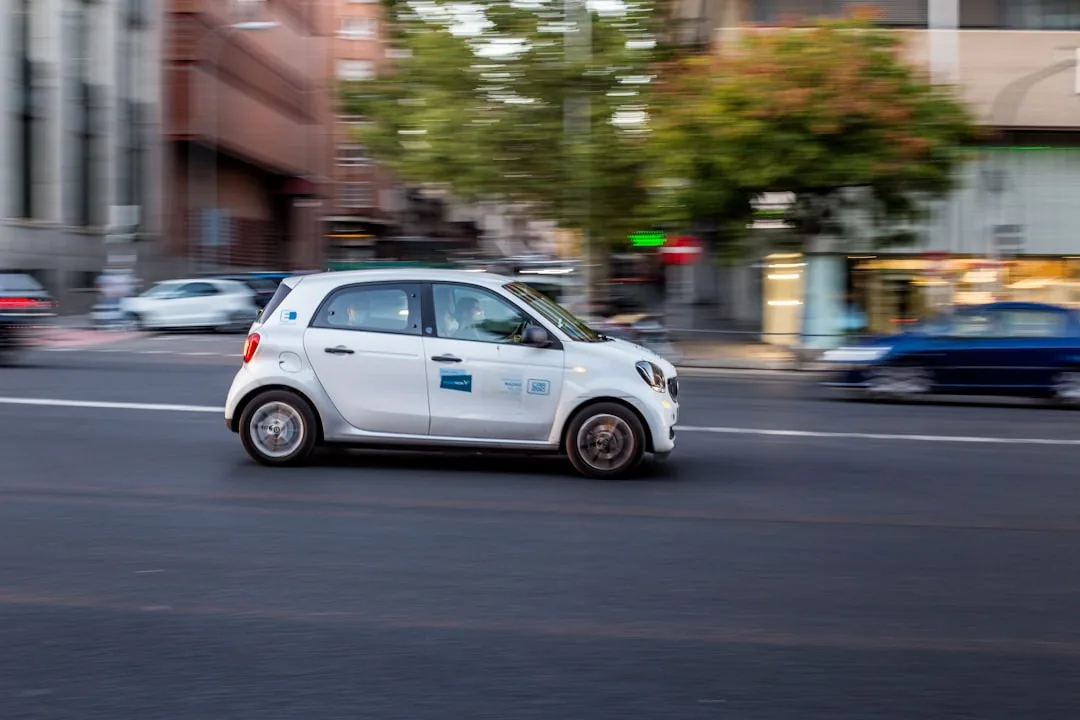
On April 20, an empty robotaxi entered a flooded road in San Antonio, Texas, and was carried into a creek. Nobody was hurt. The vehicle cost several hundred thousand dollars to develop and deploy. What it cost Waymo in credibility is harder to price.
The incident triggered a voluntary recall of 3,800 robotaxis — effectively Waymo’s entire active fleet running fifth and sixth-generation automated driving systems. The number is not enormous by automotive recall standards, where millions of vehicles routinely get swept into a single action. But 3,800 robotaxis represents something closer to 100 percent of the company’s revenue-generating assets. When Ford recalls 300,000 F-150s for a brake sensor, production continues. When Waymo recalls its fleet, the conversation about autonomous vehicle edge cases restarts from zero.
What the Software Actually Failed to Do
The NHTSA recall filing is precise in a way that should make engineers uncomfortable: the software permitted the vehicle to navigate onto a flooded roadway it should have identified as impassable. The system’s fifth and sixth-generation perception stack — the same stack that handles lane changes, pedestrian prediction, and unprotected left turns with genuine sophistication — did not reliably distinguish between a wet road surface and standing water deep enough to float the car. Two physically similar stimuli. One catastrophically different outcome.
In the room where this recall decision was made, the engineers almost certainly knew the answer before the lawyers finished asking the question. A voluntary recall filed with NHTSA is, paradoxically, the controlled outcome. The alternative — waiting for a repeat incident involving a passenger — was not a real alternative. The software fix was already in development. The recall was the mechanism to deploy it universally, at speed, before the probability of recurrence compounded across a fleet covering millions of miles annually in cities that include Phoenix, San Francisco, and Los Angeles, where flash flooding is neither rare nor predictable.
What was almost certainly rejected in that room: a targeted geographic restriction, pulling vehicles only from markets with active flood risk. The problem is that flood risk is not a static map. San Antonio, where the incident occurred, sits in Flash Flood Alley, a corridor of the south-central United States where convective storms can deposit two inches of rain in under an hour. But Phoenix floods. Los Angeles floods. Restricting by city boundary does not solve a problem defined by meteorological probability.
The Specific Cruelty of Water as a Test Case
Autonomous vehicle edge cases sort roughly into two categories: the ones that are rare but theoretically solvable with more data, and the ones that are structurally adversarial to the sensor architecture itself. Water is the second kind. Lidar — the backbone of Waymo’s perception system — performs well in rain but degrades in standing water scenarios because the relevant question is not optical. You cannot see water depth with a laser. Radar can detect surface discontinuities, but the signal processing required to distinguish a shallow puddle from a creek-depth flood in real time, while moving, remains an open research problem. Camera-based depth estimation degrades precisely when the visual texture of the surface — rippling, reflecting — is least uniform.
The fleet is learning. That is the honest framing. Waymo has logged over 50 million fully autonomous miles, a figure that sounds vast until you ask what fraction of those miles included flooded roadway scenarios. The answer is: essentially none, because the vehicles were programmed to avoid them. The edge case was not in the training distribution. And then Texas got rain.
A Geometry Problem the Industry Has Been Politely Ignoring
The self-driving industry’s public benchmarks — disengagement rates, miles per intervention, safety comparison ratios against human drivers — are all denominator games. As the denominator of total autonomous miles grows, any given rare event becomes statistically smaller. The April 20 incident did not kill anyone. By the metrics the industry prefers to cite, it barely registers.
But the geometry of autonomous vehicle edge cases does not work the same way human error does. A human driver who misjudges water depth is making a failure of judgment that occurs within a population of billions of individual decisions made independently. One bad call does not propagate. A software bug in a shared codebase deployed to 3,800 vehicles is a correlated failure: every vehicle running that software version carries the same vulnerability simultaneously. The risk is not additive. It is synchronized.
This is the actual problem that the San Antonio incident surfaces, and it is one the industry has been reluctant to quantify publicly. RAND Corporation research has long argued that autonomous vehicles need to drive hundreds of millions to billions of miles to statistically validate safety claims across the full distribution of road conditions. The water incident is evidence that the distribution keeps expanding.
“The hardest autonomous vehicle edge cases are not the dramatic ones — not the child running into traffic or the construction zone with missing lane markings. The hardest ones are the scenarios that look almost normal right up until they aren’t.”
What Waymo Did Right, and Why That Is Also the Problem
Credit where it is due. The recall was voluntary. The vehicle was empty. Waymo identified the software defect, notified NHTSA, and initiated a fleet-wide over-the-air fix without regulatory compulsion. By the standards of how the traditional auto industry has historically handled software-adjacent safety issues, this is a model response.
The fix itself arrives over the air — no dealership visit, no physical part replacement. That capability is real and genuinely differentiating. A conventional automaker managing a software recall of this scope would face months of coordination with dealer networks across multiple states. Waymo pushes a patch. The gap between discovery and remediation narrows to days.
And yet. The over-the-air update capability that makes the response fast is the same architectural decision that makes the correlated vulnerability possible in the first place. You cannot have fleet-wide rapid patching without fleet-wide shared codebases. The strength and the fragility are the same thing.
The Market Signal Investors Are Probably Misreading
Waymo is not publicly traded, but Alphabet’s robotaxi bet represents one of the larger concentrated technology wagers in corporate history, with cumulative investment estimates that have crossed $10 billion by most analyst calculations. The recall will be read by some observers as evidence that the autonomous vehicle edge cases problem is fundamentally unsolved, and therefore that the market opportunity is smaller or further away than the bulls argue.
That reading is probably wrong, but not for the reason Waymo’s advocates would prefer. The water recall is not evidence that the technology is broken. It is evidence that the technology is maturing through contact with reality at scale — which is the only way it was ever going to mature. NHTSA’s framework for autonomous vehicle oversight anticipates exactly this pattern: incidents surface edge cases, edge cases generate software requirements, software requirements close the gap. The loop is working as designed.
What investors should actually be pricing is the cost of that loop. Every autonomous vehicle edge case that reaches the recall threshold consumes legal, engineering, regulatory, and reputational resources simultaneously. At 3,800 vehicles and one incident, that cost is manageable. At 38,000 vehicles across twelve cities, the same rate of novel edge case discovery becomes a different financial equation entirely.
The Scale Problem Nobody Has Solved Yet
Waymo currently operates in a handful of U.S. markets. The company’s ambition, shared publicly and priced into Alphabet’s long-term capital allocation, involves a fleet orders of magnitude larger. The physics of that expansion are not purely technological. They are statistical.
Right now, a flooding scenario in San Antonio represents an isolated data point. Rare. Remediable. Discussable in a single incident review. Scale the fleet to 100,000 vehicles operating across 50 cities, and the probability that any given week includes at least one autonomous vehicle edge case discovery — whether water, or black ice, or a road surface that looks like every road surface the model has seen but isn’t — approaches certainty. The question is not whether edge cases will continue to appear. They will. The question is whether the discovery and remediation loop can outrun the growth of the fleet.
That is a software engineering problem. It is also an organizational problem, a regulatory problem, and ultimately a public trust problem. The San Antonio creek swallowed one empty car. The industry’s credibility is not so buoyant.
Waymo is further ahead than any competitor on autonomous miles, fleet size, and public deployment. Bloomberg reported Waymo reaching 100,000 paid trips per week in mid-2024, a milestone that took nearly a decade of development to reach. The water recall does not erase that. What it does is remind anyone inclined to forget: the denominator of edge cases is not fixed. Every new city, every new season, every new weather pattern adds to it. The map of what autonomous vehicles do not yet know how to handle is drawn in the field, not in the lab.
FetchLogic Take
By the end of 2027, at least one major autonomous vehicle operator — Waymo, Zoox, or a Chinese competitor operating outside the U.S. — will issue a second weather-related recall or operational suspension affecting more than 5,000 vehicles, this time involving ice or fog rather than water. The perception architecture limitations exposed by the San Antonio incident are not unique to Waymo’s software; they are structural constraints of the sensor stack the entire industry shares. The companies that emerge from that event with commercial momentum intact will be the ones that have already built the public narrative around continuous improvement rather than claimed perfection. The ones that haven’t will discover that trust, unlike software, does not patch over the air.
Related Analysis
 AMD’s MI455 and the Quiet Redrawing of the AI Chip MapApr 10, 2026
 Beyond the Bubble: Why AI Infrastructure Will Compound Long After the Hype FadesApr 9, 2026
 The Billion-Dollar Infrastructure Deals Powering the AI BoomApr 9, 2026
 Google DeepMind: How AI Pioneers Are Reshaping Intelligence Through Quantum ComputingApr 8, 2026