
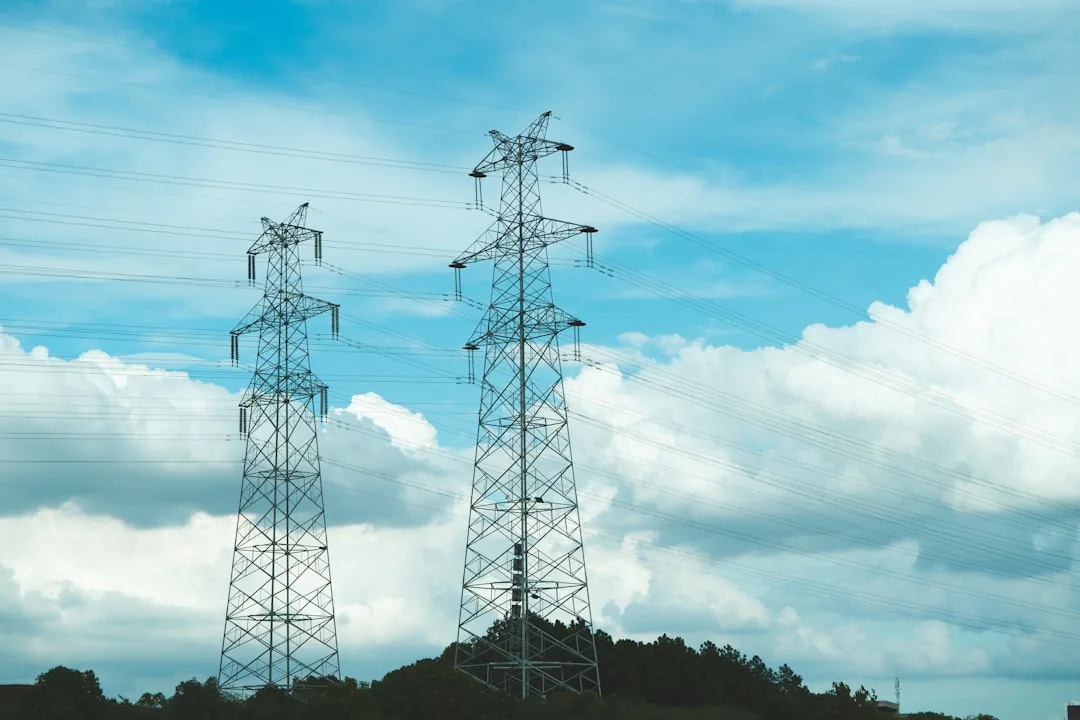
A Maryland homeowner’s electricity bill is about to rise — not because she uses more power, but because a data center in Virginia does. The mechanism is almost invisible: transmission cost allocations buried inside a regional grid operator’s planning process, denominated in billions, socialized across millions of ratepayers who never consented to the deal and may never learn it happened.
The Maryland Office of People’s Counsel put a number to it in its March 2026 report on PJM transmission cost impacts: roughly $2 billion in grid upgrade charges are being allocated to Maryland electricity customers, driven substantially by load growth from AI data centers concentrated outside the state. Maryland bears approximately 2 percent of AI workload-driven upgrade costs and 10 percent of renewable integration costs within the PJM footprint. The asymmetry between infrastructure benefit and cost assignment is the whole argument.
How PJM’s Cost Allocation Became a Subsidy Machine
PJM Interconnection operates the largest wholesale electricity market in the world, serving 65 million people across 13 states and the District of Columbia. When its planners identify a transmission constraint — a bottleneck that could compromise reliability or impede power flows — they approve upgrades and spread the costs across the region according to formulas that weight each zone by its share of total load. The logic is defensible in the abstract: a grid is a shared asset, and reliability benefits everyone on it.
The problem is that the formula was designed before any single industry could add tens of gigawatts of demand in a compressed geography within a few years. Northern Virginia alone now hosts the densest concentration of data center capacity on earth, with the IEA estimating that data centers could account for 20 percent of U.S. electricity demand growth through 2026. When that demand spike requires transmission upgrades, the formula socializes the cost. Maryland, which receives comparatively little of the economic activity those data centers generate, ends up holding a $2 billion tab.
This is the core mechanism of AI energy externalities: the entity that creates the demand captures the economic value — jobs, tax revenue, corporate earnings — while the cost of serving that demand flows outward through regulatory plumbing most people never examine. It is not fraud. It is structure.
The Ratepayer Protection Pledge That Wasn’t
There had been assurances. Maryland officials point to prior commitments — a “ratepayer protection pledge” — that were supposed to shield residential customers from being asked to fund infrastructure whose primary beneficiary is an out-of-state commercial load. The $2 billion allocation, the Office of People’s Counsel argues, breaks that commitment. The state has escalated to federal energy regulators, filing challenges that frame the cost assignment not merely as unfair but as structurally inconsistent with how transmission cost obligations are supposed to work under federal rules.
The fight is unfolding at FERC, the Federal Energy Regulatory Commission, which sets the rules governing how regional operators like PJM allocate transmission costs. FERC’s existing framework was not built to adjudicate the AI data center boom. It was built for a world where major load growth was gradual, geographically diffuse, and roughly correlated with the population distribution that determines ratepayer shares. None of those assumptions hold now.
What Maryland is really asking FERC to do is retrofit a cost-allocation doctrine to a demand pattern that postdates its design. That is a slow process. FERC proceedings run in years. The bills, however, arrive on schedules measured in months.
$2 Billion Is the Number That Fits on a Headline. The Real Figure Is Larger.
Maryland is one state in a 13-state grid. The $2 billion figure represents what one state’s customers absorb. Multiply that logic across the PJM footprint — accounting for similar cost allocations in Pennsylvania, Ohio, Illinois, and elsewhere — and the total transfer from residential and commercial ratepayers to the data center industry’s infrastructure account runs far higher. The Wall Street Journal has reported that PJM’s total approved transmission investment pipeline now exceeds $50 billion, with AI-driven load growth cited as a primary driver of new project approvals.
The scale reframes what AI energy externalities actually mean in practice. They are not an environmental abstraction or a future-state concern. They are a present-tense income transfer, occurring now, through mechanisms that have no public-facing disclosure requirement and no line item on a utility bill that says “AI data center subsidy.” A ratepayer in suburban Baltimore sees a higher kilowatt-hour charge. The causal chain between that charge and a GPU cluster in Loudoun County is real but entirely opaque.
“The way these costs are being allocated, residential customers are effectively cross-subsidizing infrastructure that serves hyperscale commercial loads. That’s not how cost causation is supposed to work.”
— Senior utility regulatory counsel, mid-Atlantic region
Why Data Centers Don’t Pay Their Own Way — Yet
The economics that created this situation were not accidental. Data center developers site facilities based on land cost, fiber connectivity, tax incentives, and power availability. Northern Virginia offered all four in abundance. Virginia’s relatively light regulatory posture and generous tax treatment for data centers — the state eliminated the sales tax on data center equipment in 2010, a policy the Virginia Joint Legislative Audit and Review Commission estimated has cost the state over $1.1 billion in foregone revenue through 2023 — made it the default choice for a generation of hyperscale buildout.
The incentive structure, in other words, was designed to attract the load without pricing the infrastructure consequence. When that consequence materialized as transmission upgrades, the cost fell not on the data center operators who created the demand, or on Virginia taxpayers who benefited from the economic activity, but on ratepayers distributed across a multi-state grid according to a formula that rewards neither fairness nor causation.
Utilities and grid operators have tools to address this — large load interconnection agreements, generator interconnection cost assignments, direct assignment of transmission upgrades triggered by specific new loads. The question is whether regulators will require data centers to use them. So far, the answer has generally been no. The AI energy externalities problem persists because it is cheaper for individual developers to let costs socialize than to negotiate direct-assignment agreements that would accurately reflect what their load actually costs the system.
What the Policy Debate Misses About the Timing
Three to five years. That is approximately how long it takes to plan, permit, and construct major transmission infrastructure in the PJM region. The data center capacity driving current upgrade approvals was contracted and under construction in 2023 and 2024. The transmission costs being debated now are the consequence of decisions already locked in. Even if FERC adopts Maryland’s preferred cost allocation methodology tomorrow, the infrastructure gets built, the costs get incurred, and the only question is who pays.
This timing gap is where the policy debate routinely loses the thread. Advocates on all sides argue about prospective rule changes while the current-cycle costs are already in the pipeline. The $2 billion Maryland is contesting is not a hypothetical. It is a receivable. By the time any regulatory reform takes effect, a new generation of data center buildout — driven by the next wave of model training and inference demand — will already be generating its own transmission obligations.
For investors, the timing asymmetry is a signal. Companies with large data center footprints in PJM territory are carrying an understated liability. The current social cost allocation means their effective infrastructure cost is subsidized by ratepayers. If FERC or Congress moves to require direct cost assignment — as the Department of Energy’s load growth reports have implicitly flagged as a coming pressure point — the cost structure of data center operations changes materially. That risk is not in most models.
The Classroom Doesn’t Know It Has a Stake in This
School districts in Maryland pay electricity bills. Hospitals, municipal water systems, small manufacturers — all of them are ratepayers in the PJM footprint, all of them absorbing a share of the $2 billion allocation Maryland is contesting. The distributional consequence of AI energy externalities is not abstract: it is a budget constraint on institutions that cannot pass costs through to customers the way a hyperscale cloud provider can. A school district that pays $200,000 more in electricity over a rate cycle does not build a classroom. A hospital system absorbing higher transmission charges does not hire a nurse.
The AI industry’s energy consumption debate has largely been conducted in terms of carbon emissions and climate commitments — a frame that is legitimate but incomplete. The cost allocation dimension, documented in filings like Maryland’s OPC report, describes a different kind of harm: a fiscal transfer from public-serving institutions and households to the infrastructure supporting private commercial AI deployments, executed through regulatory mechanisms with essentially no democratic visibility.
FERC Order 1920, finalized in May 2024, represents the most recent major overhaul of transmission planning rules and introduced long-term scenario planning requirements. Whether its successor proceedings will address the specific cost-causation problem Maryland has raised — and how quickly — will determine whether the $2 billion Maryland is contesting becomes a precedent or a template.
FetchLogic Take
Within 18 months, at least one major PJM state will win a FERC ruling requiring direct cost assignment for transmission upgrades triggered by data center loads above a defined threshold — likely 100 MW. When that ruling lands, hyperscale operators in PJM territory will face a step-change in their interconnection cost structures, and the next round of data center siting decisions will shift materially toward grids with looser cost-causation enforcement. Texas and the Southeast absorb the next wave. Maryland’s $2 billion complaint is the case that breaks the dam.
Related Analysis
 FetchLogic Weekly AI Report — May 21, 2026May 21, 2026
 Small Model + Smart Guardrails Jumps from 53% to 99% on Agent Tasks: The Efficiency Breakthrough That Makes Smaller Models CompetitiveMay 20, 2026
 314 npm Packages Hijacked in One Campaign. The Assumption That Got Everyone Killed.May 19, 2026
 FetchLogic Weekly AI Report — May 19, 2026May 19, 2026