
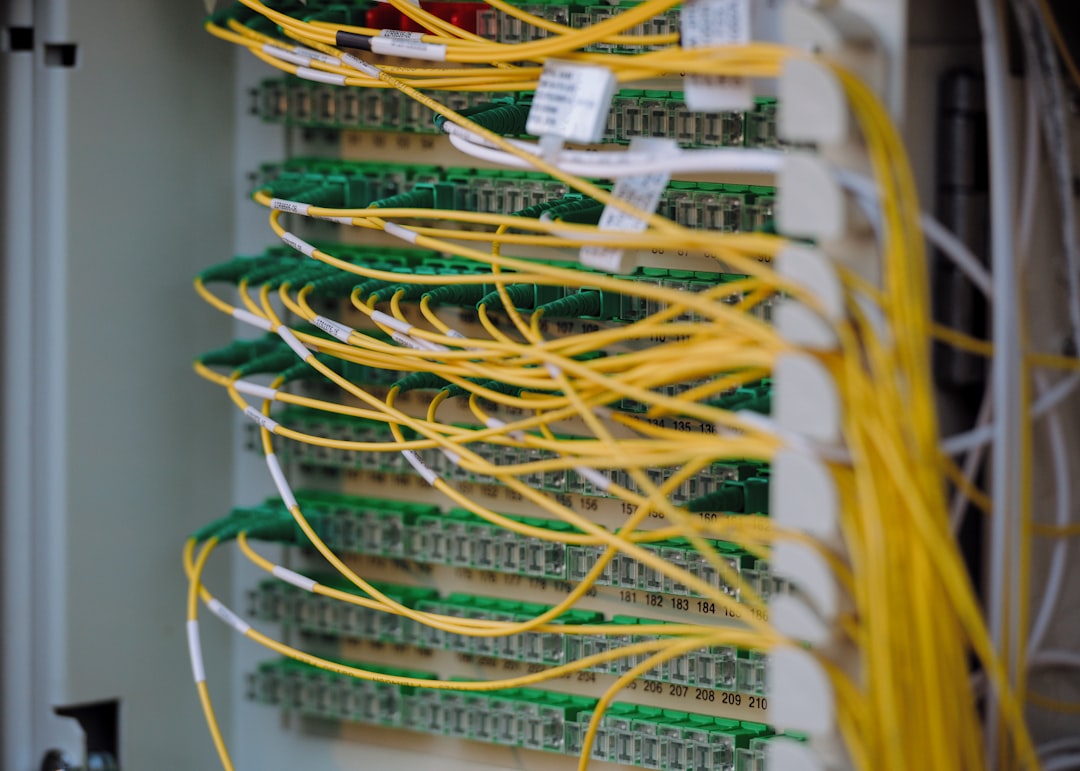
Somewhere between the graphics processor and the finished AI accelerator, the bill quietly doubled — and most of it wasn’t for the part anyone was watching. The component that now consumes 63 cents of every dollar spent building an AI chip is not the processor. It is the memory wrapped around it.
When the Supporting Actor Starts Demanding Top Billing
For decades, the processor — the engine that performs calculations — defined the cost and capability of a chip. Memory was the warehouse: necessary, cheap, rarely discussed. That relationship has inverted. Data from Epoch AI shows memory components now account for approximately 63% of AI chip costs, driven by a specific and ferociously expensive type of memory called High Bandwidth Memory, or HBM. To run a large AI model, the processor must constantly pull enormous volumes of data — not once, but thousands of times per second, simultaneously. Standard memory cannot move fast enough. HBM stacks memory chips vertically, like floors in a very small building, and connects them with thousands of tiny wires rather than a few dozen. The architecture is extraordinarily capable. It is also extraordinarily expensive to manufacture.
Think of it less like a chip and more like a pipe organ bolted to a harpsichord: the keyboard — the processor — gets all the credit, but the pipes, the bellows, the resonating chambers make up most of the structure, most of the cost, and most of what can go wrong. The analogy breaks down, of course, because pipe organs don’t become obsolete every eighteen months. HBM does.
Three Companies Hold the Keys to a Bottleneck Worth Hundreds of Billions
The global supply of HBM flows almost entirely from three manufacturers: Samsung, SK Hynix, and Micron. That oligopoly is not new, but its leverage has never been more acute. Bloomberg’s analysis of the 2026 AI hardware boom documents a historic shortage forming precisely at this chokepoint, as Nvidia, AMD, and Google compete for allocations of the same constrained supply. Each of those three buyers is building AI infrastructure at a scale that, five years ago, would have been described as implausible. Together, they are asking three manufacturers to do something those manufacturers have spent years and billions of dollars building capacity to do — and still cannot do fast enough.
SK Hynix, which supplies the HBM stacked inside Nvidia’s flagship AI processors, reported that its HBM production lines were fully committed through 2025 and into 2026 before the calendar year even opened. Capacity of that kind cannot be conjured. A new semiconductor fabrication facility requires roughly three to four years and between $10 billion and $20 billion to build. The AI industry’s appetite is growing faster than concrete can be poured.
The Acceleration That the Headline Number Understates
Sixty-three percent is the current share. The trajectory matters more than the snapshot. Memory’s portion of AI chip economics has risen steadily as model sizes have grown — larger models require not just more computation but proportionally more memory bandwidth to feed that computation. The relationship is not linear. As models scale, memory requirements scale faster, which means each successive generation of AI hardware tends to be even more memory-dominated than the last. Investors pricing the semiconductor sector on processor revenues alone are reading roughly half the income statement.
The downstream effects are already measurable in places that have nothing to do with data centers. Consumer DRAM — the memory inside laptops, phones, and tablets — is manufactured on the same production lines that, with modification, produce HBM. When those lines get reallocated toward AI, the supply available for consumer devices shrinks. Industry analysts tracking the 2026 shortage project conventional DRAM prices rising 50 to 55%, with memory’s share of total device cost climbing from a historical range of 10–18% to more than 20%. Dell has already flagged rising component expenses. Apple has said less publicly, which is its own kind of signal.
What 63% Feels Like at the Factory Gate
Consider what that split means in practice for a company building AI infrastructure. Buy a server. The processor — the part with the famous brand name on it — accounts for something under 40% of the chip’s cost. The memory wrapped around it accounts for the rest. Then consider that a single AI training cluster might contain thousands of such chips. At that scale, a 10% increase in HBM prices costs more than most companies spend on their entire hardware budget in a normal year. The AI chip economics of 2026 are not primarily a story about who designs the cleverest processor. They are a story about who can secure memory supply, at what price, under what contract terms, and whether those contracts hold when demand spikes again.
“The compute gets the headlines, but the memory is where the margin lives — or dies.”
— Semiconductor procurement director at a major cloud provider
This is the pressure that explains why Microsoft, Google, and Amazon have all accelerated their custom silicon programs. A company that designs its own AI chip can, in theory, specify exactly how much memory it needs, negotiate directly with HBM manufacturers, and avoid paying a markup to an intermediary chip designer. The strategy is less about engineering independence than about supply chain leverage in a market where leverage is everything.
The Shortage Has a Geography
HBM manufacturing is not evenly distributed across the planet. It is concentrated in South Korea, with a secondary and growing presence in the United States — partly by design, partly by subsidy. The CHIPS and Science Act directed tens of billions of dollars toward domestic semiconductor manufacturing, with memory explicitly included. Micron, the only American company in the HBM oligopoly, began shipping HBM3E to Nvidia in 2024, the first time a US manufacturer had a meaningful presence in the highest tier of AI memory supply. Its market share remains small. Building it larger is a project measured in years and capital expenditure cycles, not quarters.
The geographic concentration creates a risk that AI chip economics has not yet fully priced. South Korea sits in a region of non-trivial geopolitical complexity. A disruption to Samsung or SK Hynix — whether from a natural disaster, a labor action, or something more fraught — would have no adequate short-term substitute. The companies building AI infrastructure understand this. It is one reason that datacenter operators have begun holding larger memory inventories than their historical models would have suggested necessary: not because they expect disruption, but because the cost of being wrong is now large enough to justify the insurance.
The Next Hardware Race Is a Memory Race
The processor companies know this. Nvidia’s roadmap for its Blackwell architecture involves more HBM per chip than its predecessor. More bandwidth, more capacity, more cost. The performance gains that customers pay for are increasingly delivered not by a cleverer processor design but by feeding the existing processor faster. Speed the data pipeline, and the chip runs better. The AI chip economics of the next three years will be determined less by advances in transistor density — the traditional measure of chip progress — and more by advances in memory architecture, memory manufacturing yield, and the sheer number of HBM units that three companies can ship.
Processor. Memory. Interconnect. Cooling. Power. Those are the five physical constraints on AI hardware. Reuters reported in early 2025 that memory had displaced compute as the binding constraint cited most frequently by AI infrastructure engineers. Cooling is the constraint gaining ground fastest. Power is the constraint that governments are beginning to notice. But memory is the constraint that is costing the most money right now, today, in every AI chip budget on earth.
Prices rise. Supply trails demand. Three factories in East Asia manufacture most of what the world’s AI ambitions require. Memory’s cost share climbs. Consumer devices grow more expensive as a side effect of an industrial transformation most consumers have not been told they are funding. The AI chip economics here are not complicated. They are just uncomfortable in their simplicity: one component, in scarce supply, with no fast substitute, is now the primary determinant of how quickly and at what cost the AI industry can grow.
FetchLogic Take
By the end of 2027, memory’s share of AI chip economics will cross 70% — not because processors become cheaper, but because the next generation of models will require memory bandwidth that today’s HBM architecture cannot supply at current volumes, forcing a transition to a new memory standard that arrives in constrained quantities and premium pricing. When that happens, the three-company oligopoly will extract margin at a rate that finally forces a serious antitrust conversation in at least one major jurisdiction. The first regulatory filing will come from the EU, and it will arrive before 2028.
Related Analysis
 Memory Now Costs More Than the Processor in AI Chips – and That Changes Everything About Who Can Afford to CompeteMay 25, 2026
 Waymo’s Atlanta Flood Problem Reveals the Edge Case That Robotaxi Insurance Can’t PriceMay 22, 2026
 Waymo’s Water Problem Exposes the Last-Mile Weakness in Autonomous VehiclesMay 16, 2026
 AMD’s MI455 and the Quiet Redrawing of the AI Chip MapApr 10, 2026