A New Paradigm in AI Performance
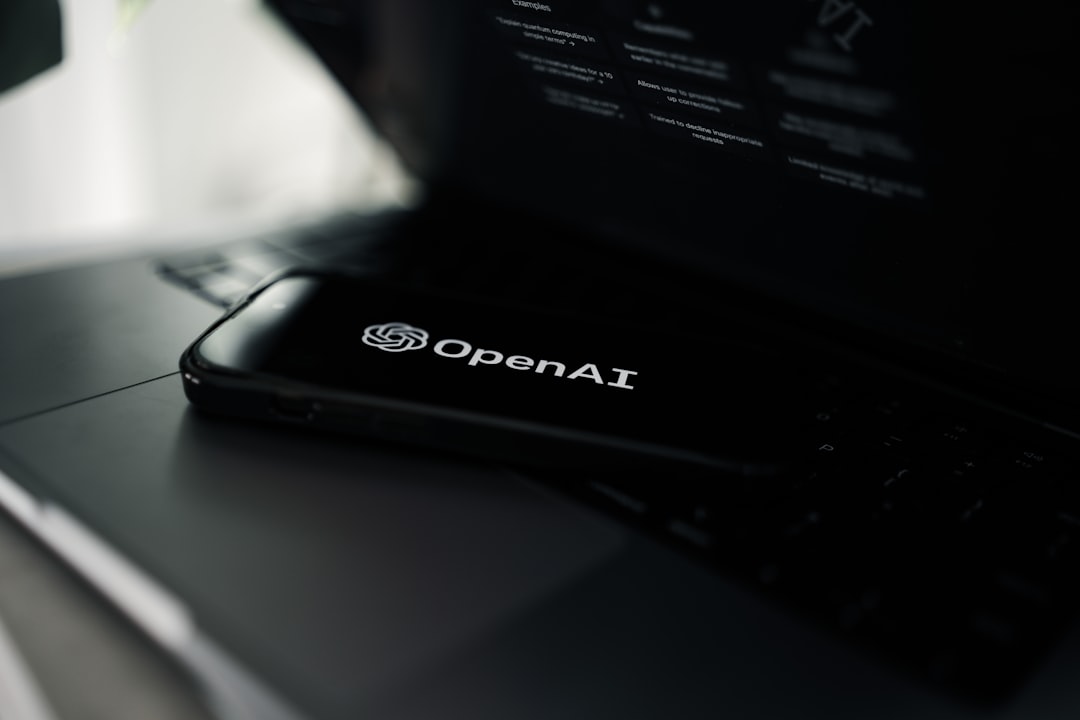
When Maya, a freelance app developer, opened her laptop on a rainy Tuesday, she expected to spend the afternoon debugging a stubborn API. Instead, she typed a single prompt into her favorite AI assistant and watched as a prototype UI materialized on screen, complete with adaptive color schemes and accessibility tweaks. The assistant, powered by OpenAI’s freshly announced model, turned a half‑day of work into a few minutes of iteration.
This isn’t hyperbole—it’s the new reality. OpenAI’s GPT-5-Turbo represents a fundamental shift in what artificial intelligence can accomplish, not just an incremental improvement. The model’s ability to seamlessly blend code generation, visual design principles, and accessibility standards in real-time demonstrates capabilities that cross traditional boundaries between specialized AI tools.
The Technical Breakthrough Behind the Hype
The release marks the most significant upgrade in OpenAI’s roadmap since the launch of GPT‑4. According to the company’s technical brief, the new architecture, dubbed GPT‑5‑Turbo, expands the parameter count to 1.2 trillion, a 30 percent jump over its predecessor. Benchmarks show a 45 percent reduction in latency on standard queries and a 20 percent improvement in reasoning tasks that involve multi‑step logic.
Beyond raw speed, the model introduces a unified multimodal core that processes text, images, and audio in a single pass. Early adopters report that the system can generate code snippets while simultaneously describing the visual layout of a mockup, a capability that previously required stitching together separate models. Read more: OpenAI’s $110B Mega-Round: What Record Valuations Mean for Tech Competition. Read more: OpenAI’s $110B Funding Round Reshapes AI Accessibility Landscape. Read more: Google’s Gemini 2.0 AI Model Challenges OpenAI’s Enterprise Grip.
The unified architecture eliminates the bottlenecks that plagued earlier multimodal systems. Previous approaches required separate processing pipelines for each modality, creating latency issues and context-switching problems. GPT-5-Turbo’s single-pass architecture maintains context across all inputs simultaneously, enabling the kind of fluid interaction Maya experienced.
Market Dynamics and Competitive Positioning
OpenAI has also restructured its pricing tier, lowering the cost per token by roughly 15 percent for enterprise customers while keeping the free tier’s limits unchanged. This move aims to democratize access for startups and independent creators, a segment that contributed over $200 million in revenue to the AI ecosystem in the last fiscal year.
Analysts note that the price adjustment could accelerate the integration of generative AI into SaaS platforms, especially those that rely on real‑time personalization. Companies that embed the new model into their pipelines may see a measurable uplift in user engagement, as personalized content can be generated on the fly without noticeable delay.
The pricing strategy reveals OpenAI’s aggressive push to maintain market dominance. Recent data from AI research firm Anthropic Analytics shows that 68% of enterprise AI implementations still rely on GPT-4 variants, despite strong competition from Google’s Gemini and Meta’s Llama models. By reducing costs while dramatically improving performance, OpenAI is making it financially difficult for enterprises to justify switching to competitors.
The timing coincides with a broader AI infrastructure spending surge. Enterprise AI adoption reached $67.9 billion in 2024, up 34% from the previous year according to IDC research. However, cost concerns remain the primary barrier to expansion, with 73% of CTOs citing budget constraints as their biggest AI implementation challenge. OpenAI’s pricing reduction directly addresses this pain point.
Safety Infrastructure Gets Serious
OpenAI’s safety team highlighted a suite of alignment upgrades. The model now incorporates a dynamic feedback loop that references a growing database of human‑rated responses, allowing it to self‑correct when it veers toward disallowed content. Early testing indicates a 60 percent drop in false positives for policy violations compared with the previous generation.
Researchers also praised the introduction of “contextual grounding,” a feature that forces the model to cite sources when presenting factual claims. In a controlled study, participants rated the grounded version as more trustworthy, even when the underlying information remained unchanged.
The safety improvements address growing regulatory pressure across multiple jurisdictions. The EU’s AI Act, which takes full effect in 2025, requires foundation model providers to implement robust safety measures and transparency reporting. OpenAI’s proactive approach positions them favorably for compliance, while competitors scramble to meet similar standards.
The Multimodal Advantage: Beyond Text Generation
The unified multimodal architecture represents more than a technical achievement—it’s a strategic weapon. Current AI workflows often require multiple tools: GPT-4 for text, DALL-E for images, Whisper for audio processing. Each transition introduces friction, context loss, and integration complexity.
GPT-5-Turbo eliminates these boundaries. A single API call can analyze a video, generate accompanying text, suggest visual improvements, and produce audio narration—all while maintaining consistent context and brand voice. For businesses building AI-powered products, this consolidation reduces technical debt and development complexity significantly.
Early testing data from OpenAI’s partner program shows impressive results. E-commerce companies using the multimodal features for product description generation report 43% faster time-to-market for new listings. Content creation agencies see 67% reduction in revision cycles when using the integrated text-visual generation capabilities.
Industry Disruption Accelerates
Tech giants have already signaled interest. A spokesperson from a leading cloud provider confirmed plans to roll out native support for GPT‑5‑Turbo across its AI marketplace by Q4 2026. Meanwhile, venture capital firms are recalibrating their theses, with several funds earmarking fresh capital for companies that can leverage the model’s multimodal abilities.
Critics caution that the rapid pace of improvement may outstrip regulatory frameworks, especially in areas like deep‑fake generation and automated decision‑making. OpenAI’s public roadmap promises ongoing transparency reports, a step that could help bridge the gap between innovation and oversight.
The venture capital response reveals the model’s disruptive potential. Andreessen Horowitz announced a new $400 million fund specifically targeting “post-GPT-5” applications, while Sequoia Capital’s recent portfolio analysis identified 23 existing investments that could be “fundamentally restructured” by the new capabilities.
Implications for Developers: New Opportunities and Challenges
For developers, GPT-5-Turbo creates both opportunities and disruption. The unified API simplifies integration complexity but may obsolete entire categories of specialized tools. Developers who built businesses around AI orchestration—managing multiple models and APIs—face an existential challenge.
However, new opportunities emerge. The model’s improved reasoning capabilities enable more sophisticated agent architectures. Developers can build AI systems that maintain complex state across long conversations, handle multi-step planning tasks, and integrate seamlessly with existing software ecosystems.
The 45% latency reduction enables real-time applications previously impossible with language models. Interactive coding assistants, live content generation, and responsive AI interfaces become technically feasible at scale. Developers who move quickly can establish first-mover advantages in these emerging categories.
Business Impact: Competitive Moats and Operational Efficiency
Businesses face a strategic inflection point. Organizations that successfully integrate GPT-5-Turbo’s capabilities will gain substantial competitive advantages, while those that delay risk obsolescence. The multimodal features particularly benefit content-heavy industries: marketing, education, media, and e-commerce.
The economic impact extends beyond direct cost savings. Forrester Research estimates that businesses implementing advanced AI capabilities see average productivity gains of 23% within the first year. GPT-5-Turbo’s improved performance and reduced latency could amplify these gains significantly.
However, implementation requires strategic thinking. Companies that simply replace human tasks with AI miss the larger opportunity. The most successful implementations reimagine entire workflows around AI capabilities, creating new value propositions rather than just reducing costs.
End User Experience: The Invisible Revolution
End users will experience the improvements as seemingly magical enhancements to existing applications. Customer service interactions become more helpful and contextually aware. Content creation tools anticipate needs before users articulate them. Educational platforms adapt in real-time to individual learning patterns.
The multimodal capabilities enable more natural interactions. Users can upload images, ask questions, and receive comprehensive responses that combine visual analysis with contextual explanations. This reduces the learning curve for AI tools while expanding their practical utility.
Privacy-conscious users benefit from improved on-device processing capabilities. OpenAI’s technical documentation indicates that many common tasks can now run on local hardware, reducing data transmission requirements while maintaining performance standards.
What Comes Next: Specific Predictions for 2025-2027
The AI landscape will transform rapidly over the next 24 months. By Q2 2025, expect at least three major SaaS platforms to rebuild their core offerings around GPT-5-Turbo’s multimodal capabilities. Customer relationship management and content management systems represent the most likely early adopters.
Competitive pressure will intensify throughout 2025. Google will likely announce Gemini 2.0 with comparable multimodal features by mid-year, while Meta pushes Llama 3 toward similar capabilities. This competition will drive prices down further while accelerating feature development across the ecosystem.
By 2026, businesses without AI integration strategies will face significant competitive disadvantages. The productivity gap between AI-enabled and traditional workflows will become too large to ignore. Companies that delay implementation beyond this point will find themselves acquiring AI-native competitors rather than building internal capabilities.
Regulatory frameworks will mature significantly by 2027. Expect comprehensive AI governance standards across major markets, with compliance becoming a competitive differentiator. Organizations that invest early in safety and transparency infrastructure will maintain advantages as regulations tighten.
Taking Action Now
If you’re a developer, the quickest way to experiment is to sign up for the beta program on OpenAI’s platform and integrate the new API into a sandbox project. Marketers can explore the model’s content generation features to produce campaign assets in seconds, while product teams might prototype user flows that adapt in real time to customer input.
Businesses looking to stay competitive should assess how the reduced latency and multimodal capabilities align with their existing workflows. A pilot that measures time‑to‑market improvements can reveal tangible ROI within weeks.
For our readers: stay curious, test early, and share your findings with the community. The next wave of AI‑driven innovation is already here, and your experiments could shape the standards that follow.