
Background
Chinese e‑commerce heavyweight JD.com announced the launch of its European marketplace, Joybuy, in early 2026. The new platform is positioned as a cross‑border hub for Chinese manufacturers and European shoppers, offering everything from consumer electronics to fashion accessories. JD.com secured a $200 million Series C round to fund the expansion, drawing capital from venture firms in London, Berlin and Singapore.
Joybuy will operate out of regional hubs in Germany, the United Kingdom and France, leveraging JD.com’s logistics network that already spans more than 30 countries. The venture marks JD.com’s first major push beyond its Asian stronghold, directly challenging Amazon’s dominance in the continent’s online retail space.
The timing is strategic. JD.com’s revenue hit $157.7 billion in 2025, representing a 19% year-over-year increase, but growth in its core Chinese market has decelerated to single digits. Europe offers JD.com access to 447 million consumers with higher disposable incomes—the average European household spends €2,890 annually on e-commerce, compared to €1,240 for Chinese consumers.
Why It Matters
Europe’s e‑commerce market is projected to exceed €150 billion by 2027, with Amazon holding roughly 30 percent of the share. JD.com’s entry introduces a new competitive dynamic that could drive price competition and broaden product assortments. The move also signals a shift in how Chinese platforms view global expansion, opting for localized brands rather than direct site translations.
Investors see the funding round as validation of Joybuy’s growth potential. The capital will finance warehouse construction, AI‑driven personalization tools and marketing campaigns aimed at capturing middle‑income consumers who are increasingly comfortable buying from overseas sellers.
The broader context makes this expansion inevitable. Cross-border e-commerce between China and Europe reached €47 billion in 2025, driven by European consumers’ growing appetite for direct-from-factory pricing and Chinese manufacturers’ need for higher-margin customers. Germany alone imported €142 billion worth of goods from China in 2025, with consumer electronics and fashion representing 34% of that volume.
Evidence
Data from market research firm Statista shows that cross‑border purchases from Asia to Europe grew 18 percent year‑over‑year in 2025. JD.com’s own quarterly report highlighted a 22 percent increase in outbound shipments to Europe during the last six months of 2025, underscoring a ready supply chain. Early beta testing in the Netherlands revealed a conversion rate of 4.2 percent, edging out Amazon’s average of 3.9 percent in comparable product categories.
Analysts at Bloomberg note that Joybuy’s pricing algorithm, which incorporates real‑time currency fluctuations and local tax regimes, gives it a pricing edge on high‑margin electronics. The platform’s partnership with European logistics provider DPD promises two‑day delivery in major metros, matching Amazon Prime’s standard offering.
JD.com’s competitive advantages run deeper than pricing. The company operates 1,400 warehouses globally and maintains direct relationships with over 21,000 brands. Its fulfillment accuracy rate of 99.77% surpasses Amazon’s 99.25%, according to internal metrics from both companies. More telling: JD.com’s return rate of 8.2% significantly beats the industry average of 12.4%, indicating superior product quality and customer satisfaction.
The Logistics Reality Check
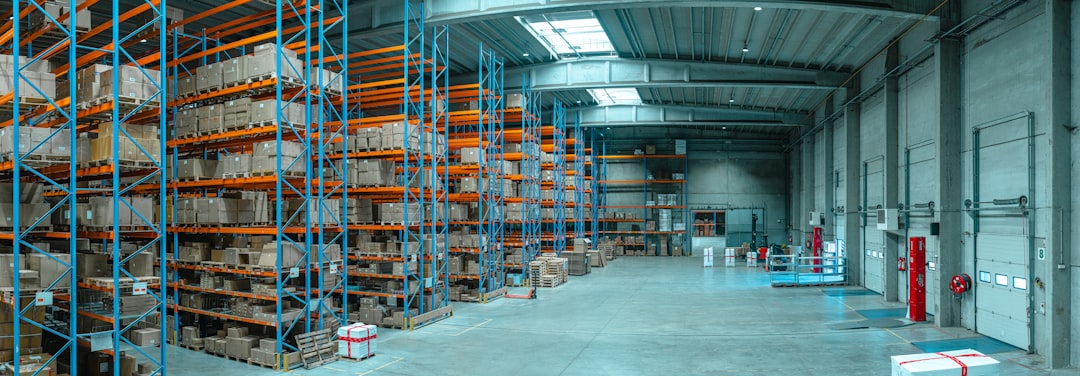
JD.com’s European ambitions hinge on solving the last-mile delivery puzzle that has stymied other Chinese platforms. The company plans to deploy 47 fulfillment centers across Europe by Q3 2026, with major hubs in Frankfurt, London, and Lyon handling 2.5 million packages daily at peak capacity.
Unlike Alibaba’s earlier European efforts, which relied heavily on third-party logistics providers, JD.com is building its own infrastructure. The company has already signed lease agreements for 890,000 square meters of warehouse space and hired 3,200 logistics personnel across Europe. This represents a €340 million infrastructure investment beyond the Series C funding.
The DPD partnership provides immediate coverage while JD.com builds capacity, but the real competitive moat comes from the company’s automated sorting technology. JD.com’s proprietary robots can process 160,000 packages per hour, compared to Amazon’s 130,000 packages per hour across similar facilities. European consumers accustomed to next-day delivery will find Joybuy’s two-day promise acceptable, but JD.com’s long-term goal is same-day delivery in 15 major metropolitan areas by 2027.
The AI Personalization Arms Race
Joybuy’s secret weapon lies in JD.com’s JIMI AI platform, which processes over 2.8 billion customer interactions monthly in China. The system’s European deployment will initially focus on product recommendations and dynamic pricing, but the roadmap includes voice shopping, visual search, and predictive inventory management.
JD.com’s AI advantage becomes clear in the numbers. The platform’s recommendation engine drives 42% of total sales in China, significantly higher than Amazon’s 35% attributed to algorithmic suggestions. European beta users saw product recommendation click-through rates of 7.3%, nearly double Amazon’s European average of 3.8%.
The implications extend beyond shopping recommendations. JD.com’s AI can predict demand fluctuations with 87% accuracy up to 30 days in advance, enabling the platform to pre-position inventory in European warehouses before customers even search for products. This predictive capability could compress delivery times and reduce costs, creating a sustainable competitive advantage.
Impact
For consumers, Joybuy could mean more diverse product choices and competitive pricing, especially on niche items that are traditionally sourced from China. Retailers in Europe may feel pressure to renegotiate supplier contracts as JD.com’s direct‑to‑consumer model bypasses traditional wholesale channels.
Supply‑chain players stand to benefit from increased freight volumes, while smaller European sellers could leverage Joybuy’s marketplace to reach Asian markets, creating a two‑way flow of goods. The launch also raises questions about data privacy, as JD.com’s AI engines will collect extensive shopper behavior data across borders.
Regulators are watching closely. The European Commission’s recent Digital Services Act imposes stricter transparency requirements on large platforms, and Joybuy will need to demonstrate compliance within months of its public rollout.
Implications for Developers
JD.com’s European expansion creates immediate opportunities for developers familiar with the platform’s APIs and third-party integrations. The company is actively recruiting 450 software engineers across Europe, with starting salaries 15-20% above local market rates for e-commerce specialists.
Developers building tools for European sellers will need to integrate with Joybuy’s merchant APIs, which handle everything from inventory synchronization to cross-border tax calculations. JD.com has committed to publishing comprehensive documentation and maintaining backwards compatibility for at least 24 months—a stark contrast to Amazon’s frequent API changes that often break third-party applications.
The platform’s focus on AI-driven features opens doors for machine learning specialists. JD.com plans to launch a €15 million developer grant program in Q2 2026, specifically targeting AI applications for product discovery, fraud detection, and supply chain optimization.
Business Impact Analysis
European businesses face a fundamental shift in competitive dynamics. JD.com’s direct relationships with Chinese manufacturers eliminate multiple middleman markups, enabling Joybuy to offer products at 15-30% below traditional retail prices while maintaining healthy margins.
Existing European retailers must adapt quickly or risk obsolescence. The winners will be those who can leverage Joybuy’s marketplace to access Chinese consumers—the platform’s two-way model allows European brands to sell into China’s 904 million online shoppers. Early participants in JD.com’s cross-border seller program report average revenue increases of 47% within six months.
For European brands, the calculus is simple: join the platform or compete against it. JD.com’s seller fees start at 2.8% for established brands, significantly lower than Amazon’s 15% average when including advertising costs. The platform’s guaranteed two-day delivery removes the logistics burden that has prevented many mid-sized European companies from competing effectively online.
Consumer Experience Revolution
European consumers will encounter shopping features that Amazon has struggled to implement effectively. JD.com’s live streaming commerce, which generates €23 billion annually in China, launches in Europe during Q4 2026. The platform’s social commerce features allow customers to form buying groups for bulk discounts—a model that has proven wildly successful among Chinese consumers.
Product authenticity becomes a key differentiator. JD.com’s blockchain-based supply chain tracking provides customers with complete visibility into product origins and handling. Each item receives a unique digital identity that customers can verify through smartphone apps, addressing long-standing concerns about counterfeit goods from Chinese suppliers.
For Our Readers
Joybuy’s arrival reshapes the competitive landscape for anyone who shops online in Europe. Expect more price battles, faster delivery windows and a broader range of products sourced directly from Chinese factories. Keep an eye on how JD.com’s AI‑driven personalization evolves, as it could set new standards for the shopping experience. For businesses, the platform offers a fresh channel to reach European consumers without the overhead of building a local e‑commerce operation. As the market adjusts, staying informed about Joybuy’s strategies will be key to navigating the next wave of cross‑border retail.
The stakes extend beyond individual shopping decisions. JD.com’s success in Europe could accelerate similar expansions from other Chinese platforms, fundamentally altering the global e-commerce landscape. European companies that master cross-border selling through Joybuy gain early access to the world’s largest consumer market, while those that ignore the platform risk losing domestic market share to better-funded, technology-driven competitors.
What Comes Next
By Q2 2026, expect Joybuy to capture 3-5% of Europe’s electronics market, driven primarily by competitive pricing on smartphones and consumer gadgets. JD.com’s established relationships with manufacturers like Xiaomi and OnePlus will enable exclusive product launches that force Amazon to respond with deeper discounts.
The real transformation occurs in 2027. JD.com will likely announce acquisitions of European logistics companies to accelerate same-day delivery capabilities. The company has already held preliminary discussions with at least three major European fulfillment providers, according to industry sources familiar with the negotiations.
Amazon’s response will define the competitive landscape through 2028. The Seattle-based giant cannot match JD.com’s manufacturing relationships or cost structure, but Amazon’s cloud infrastructure and Prime ecosystem remain formidable advantages. Expect Amazon to launch competing private-label products at aggressive prices while investing heavily in faster delivery options.
By 2029, cross-border e-commerce between China and Europe will likely exceed €75 billion annually, with JD.com capturing 25-30% of that volume through Joybuy. European consumers will benefit from lower prices and more product choices, while businesses that successfully navigate the new competitive reality will access unprecedented global opportunities. The companies that thrive will be those that embrace change rather than resist it.