“When a machine beats the best humans at chess, we update our board games. When it beats them at open-ended problem solving, we have to update our assumptions about what humans are actually for in a knowledge economy,” said a chief technology officer at a Fortune 100 financial services firm, speaking at a private AI briefing in September.
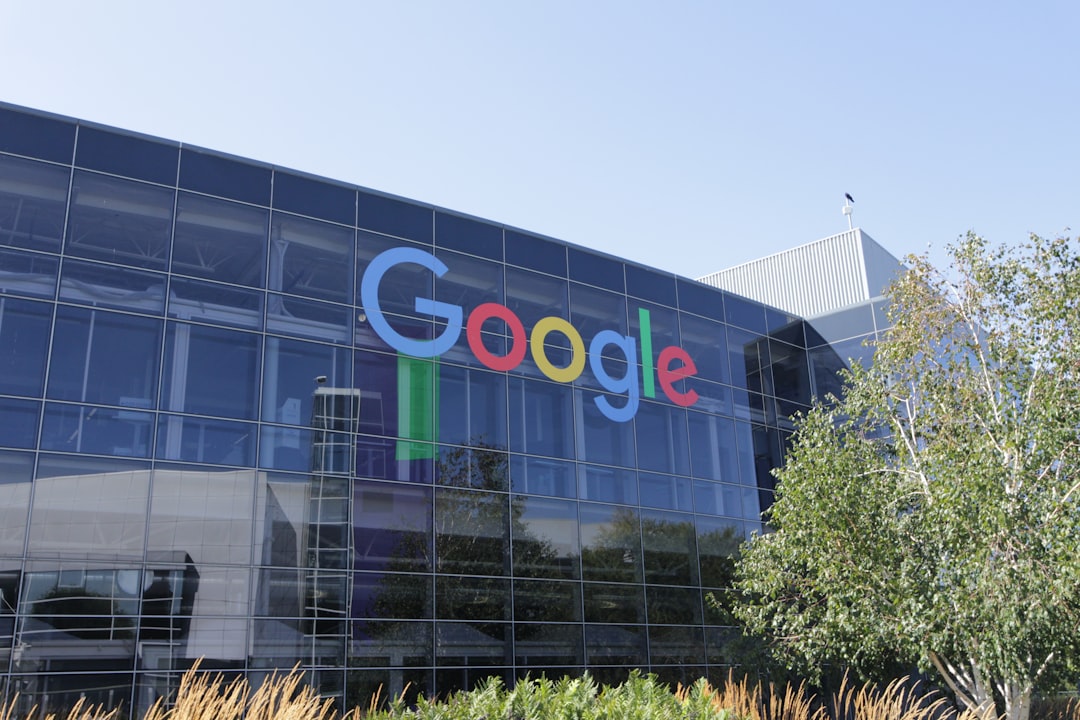
That reckoning arrived in earnest this month. Google DeepMind announced what it is calling a historic AI breakthrough: a version of its Gemini 2.5 model performed at elite levels in an international competitive programming competition, solving complex algorithmic problems that have historically required not just technical fluency but genuine mathematical ingenuity. The company drew explicit comparisons to Deep Blue’s defeat of Garry Kasparov in chess and AlphaGo’s conquest of the Go board — cultural inflection points, not merely engineering milestones.
Executives who filed this under “impressive demo” are making a strategic error. The distinction between a benchmark result and a capability shift matters enormously here, and this particular result sits firmly in the second category.
What Actually Happened — and Why Competitive Programming Is the Right Test
Competitive programming problems, unlike most AI benchmarks, cannot be gamed through memorization. The International Olympiad in Informatics and similar competitions present novel problems requiring contestants to construct original algorithms under time pressure. There is no corpus of identical prior questions to train against. A model that performs well here is demonstrating something closer to fluid reasoning than pattern retrieval — a distinction that matters enormously when evaluating real-world utility. Read more: Google’s Gemini 2.0 AI Model Challenges OpenAI’s Enterprise Grip. Read more: Google’s Gemini AI Model: Technical Deep-Dive & OpenAI Competition. Read more: Google’s Gemini 2.0 Reshapes Natural Language Processing.
DeepMind’s result represents an AI breakthrough in that precise dimension. Earlier systems, including Google’s own AlphaCode, showed that AI could produce workable code for standard engineering tasks. The new Gemini 2.5 result suggests the model can engage in the kind of structured creative reasoning — hypothesis formation, constraint satisfaction, iterative refinement — that underpins not just software development but financial modeling, legal analysis, scientific research, and strategic planning.
This is the leap investors and executives have been waiting for, and many have not yet recognized it has occurred.
The Benchmark Caveat Every Board Room Should Know
One detail buried in the coverage deserves amplification. According to reporting on the competition, the version of Gemini 2.5 used was not the same model available to subscribers of Google’s $250-a-month AI Ultra service. That gap — between competition-optimized capability and commercially deployed capability — is standard practice in frontier AI development, but it carries real implications for enterprises making procurement and integration decisions today.
“The danger for enterprise buyers is confusing what a lab can demonstrate under controlled conditions with what their teams will actually have access to in the next twelve months. The gap between frontier and deployed has historically been eighteen months to three years. That gap is now compressing, but it has not disappeared.”
This is not a reason to dismiss the result. It is a reason to structure AI investments with optionality — contracts and architectures that can absorb rapid capability upgrades — rather than locking into static deployments built around today’s model versions.
How This AI Breakthrough Fits the Broader 2025 Research Landscape
DeepMind’s programming competition result did not emerge in isolation. Google’s own year-in-review documentation identifies eight distinct research breakthrough areas in 2025, spanning protein structure prediction extensions, climate modeling, mathematics, and multimodal reasoning. Google Research’s 2025 retrospective describes an explicit strategic shift toward higher-risk, longer-horizon research bets — the kind of portfolio posture that precedes capability step-changes rather than incremental refinement.
The competitive programming result should be read as the most publicly legible signal of a broader capability curve that is steepening across multiple domains simultaneously. For investors tracking AI infrastructure spend, this matters: steepening capability curves justify continued aggressive capital allocation into compute and tooling. For enterprise buyers, it means the cost-benefit calculus of delaying AI integration is getting worse every quarter.
| Milestone | Year | Domain | Human Benchmark Defeated | Commercial Lag to Deployment |
|---|---|---|---|---|
| Deep Blue vs. Kasparov | 1997 | Chess | World Chess Champion | Limited — game-specific, no broad commercial path |
| AlphaGo vs. Lee Sedol | 2016 | Go | World Go Champion | 3–5 years to adjacent reasoning applications |
| AlphaCode | 2022 | Competitive Programming | ~50th percentile human programmer | 18–24 months to enterprise coding assistants |
| Gemini 2.5 (Competition Build) | 2025 | Elite Competitive Programming | Near top-percentile human competitors | Estimated 12–18 months to full commercial parity |
The Competitive Map Is Shifting Faster Than Most Strategy Teams Have Modeled
Google DeepMind’s announcement lands in a competitive environment that is simultaneously crowded and consolidating. OpenAI’s o-series models, Anthropic’s Claude, and Meta’s Llama architecture have each staked claims to reasoning superiority over the past eighteen months. What distinguishes the DeepMind result is the choice of proving ground: competitive programming is a credibility test that the research community takes seriously precisely because it is hard to fake.
The practical effect for enterprise strategy is a compression of decision timelines. Organizations that were operating on a “wait and evaluate in 2026” posture need to revisit that assumption. The AI breakthrough dynamic is no longer a lab phenomenon unfolding on a distant horizon — it is producing commercially relevant capability every two to three quarters, with the Gemini competition result as the latest evidence.
The industries with the most immediate exposure are those whose competitive moat has rested on the scarcity of expert human reasoning: management consulting, investment research, specialized legal services, and advanced software engineering. None of those moats are gone. All of them are narrowing.
What the $250-a-Month Price Point Actually Signals
It is worth spending a moment on Google’s AI Ultra subscription tier, priced at $250 per month for individual access. That figure is notable not as a consumer price point but as a signal of where Google believes the value ceiling sits for knowledge worker augmentation at the individual level. Annualized, that is $3,000 per knowledge worker — a number that compares favorably to the marginal cost of a single hour of specialist consulting time in most markets.
For CFOs evaluating AI spend, the arithmetic is increasingly straightforward. The question is no longer whether AI tools produce positive ROI in knowledge-intensive workflows. The competitive programming result reinforces that the capability tier required to generate that ROI is now commercially accessible, even if the absolute frontier remains a version or two ahead of what subscribers can access today.
Enterprise licensing structures, which typically offer significantly more favorable per-seat economics than consumer tiers, make the ROI case more compelling still. The procurement conversation has shifted from “can this do anything useful?” to “how do we build the organizational infrastructure to absorb what it can already do?”
The Measurement Problem Nobody Is Talking About
Here is the underreported risk embedded in this AI breakthrough narrative: organizations that do not develop internal capability to evaluate AI model performance will be permanently dependent on vendor benchmarks to make deployment decisions. That is a structurally weak position.
The gap between a competition-optimized model and a commercially deployed model, noted above, illustrates exactly why. Google is under no obligation to deploy its best-performing research configurations on a commercial timeline that suits enterprise buyers. The companies that will extract the most value from this technology wave are those building internal evaluation infrastructure now — teams capable of running their own domain-specific benchmarks, stress-testing model outputs against real business workflows, and making evidence-based deployment decisions rather than reacting to vendor announcements.
The competitive programming result is a useful forcing function. It demonstrates that the AI breakthrough threshold for open-ended reasoning has been crossed. It does not tell any specific organization how close their particular use case is to that threshold, or when the commercial version will reach it. That analysis requires internal capability that most enterprises have not yet built.
FetchLogic Take
Within 18 months, competitive programming performance will cease to function as a meaningful differentiator among frontier AI labs — because all of them will have cleared it. The actual strategic moat will shift entirely to deployment infrastructure, enterprise integration depth, and the ability to customize reasoning models against proprietary organizational data. Google’s announcement today is the last moment this class of benchmark result will generate genuine competitive separation. The race that follows is not about raw capability; it is about which platform becomes the operating system for institutional knowledge work. Google, Microsoft, and Anthropic are all positioning for that prize. The programming competition is prologue. Executives who treat it as the main event are watching the wrong game.