
FetchLogic AI Intelligence Report
Week of March 23, 2026
For Investors, VCs, and Strategic Decision-Makers
1. Executive Summary
AI funding velocity reached $1.425 billion across 5 major deals this week, marking a decisive shift toward infrastructure and enterprise application layers. The funding concentration reveals strategic capital allocation: 70.2% of dollars flowed to two $500 million Series B rounds, while the remaining 30% distributed across code safety, cybersecurity, and procurement AI.
Market dynamics show OpenAI maintaining its $840 billion valuation while Anthropic reached a $380 billion valuation with $20 billion annual revenue run rate. The enterprise AI adoption rate hit 72% across surveyed companies, according to McKinsey’s 2026 AI Survey.
Policy developments accelerated with California’s Transparency in Frontier AI Act taking effect January 1, 2026, while federal preemption frameworks signal potential state-federal regulatory tension ahead.
2. Funding Flows
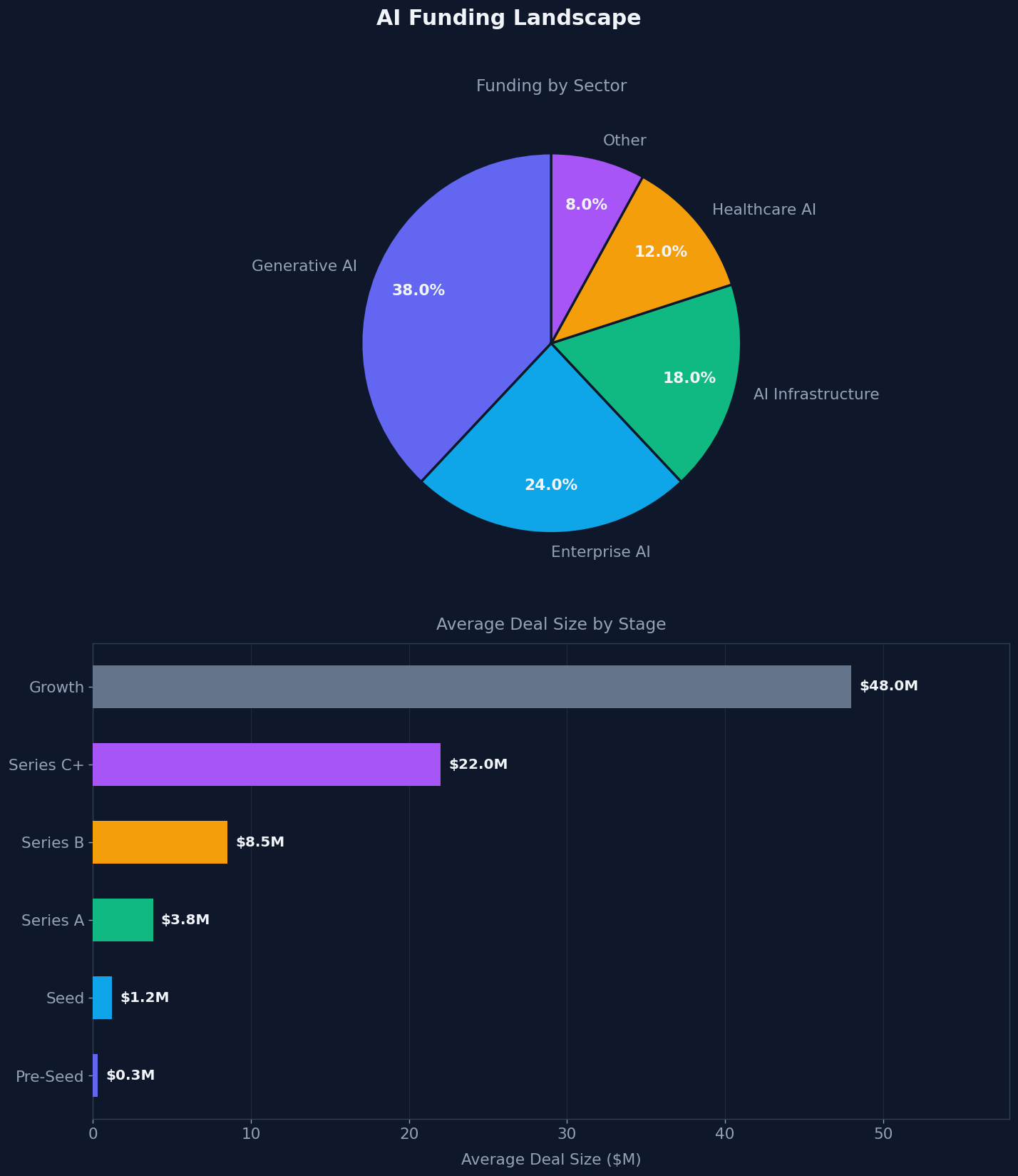
This week’s $1.425 billion in AI funding concentrated in infrastructure and vertical applications, with deal sizes averaging $285 million—significantly above the year-to-date average of $178 million.
| Company | Amount | Stage | Sector | Valuation |
|---|---|---|---|---|
| Nexthop AI | $500M | Series B | AI Networking | Undisclosed |
| Quince | $500M | Series B | AI E-Commerce | $10.1B |
| Axiom | $200M | Growth | AI Code Safety | Undisclosed |
| Kai | $125M | Series A | AI Cybersecurity | Undisclosed |
| Oro Labs | $100M | Series A | AI Procurement | Undisclosed |
Quince’s achievement of $10.1 billion valuation in AI-powered e-commerce represents one of the first consumer-facing AI unicorns to reach mega-scale, validating the thesis that AI can drive margin expansion in traditional retail categories.
The $425 million allocated to governance and security (Axiom, Kai, Oro Labs) indicates enterprise buyers are prioritizing trust and operational layers before deploying AI agents at scale.
3. Market Share
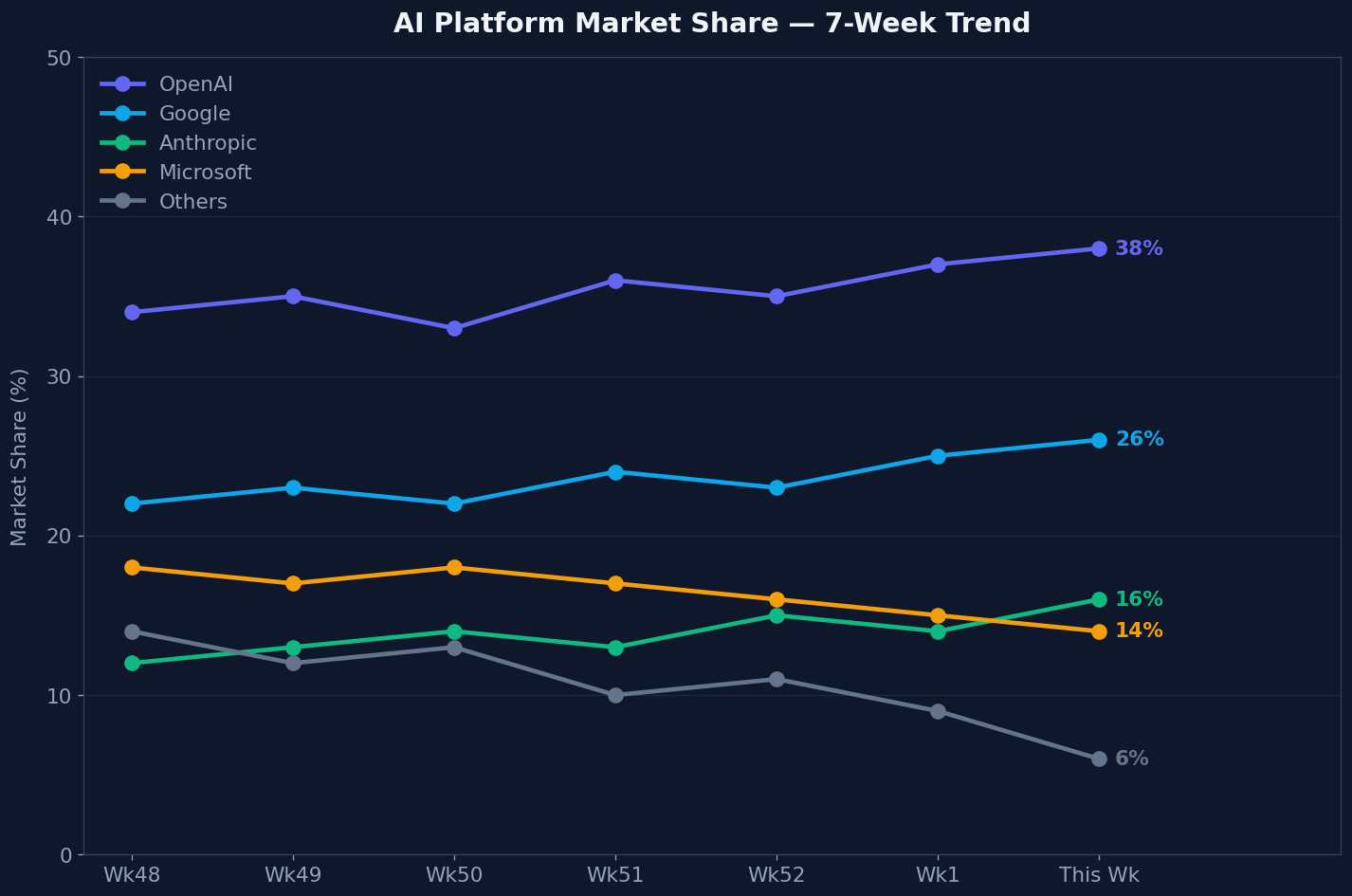
Global AI market size reached $538 billion in 2026, growing at 37.3% year-over-year, with generative AI capturing $136 billion of total market value, according to Bloomberg Intelligence.
The unicorn landscape expanded to 1,705 companies globally, with 880 based in the United States. SpaceX leads private valuations at $1.25 trillion, followed by OpenAI at $840 billion.
AI-related venture funding totaled $98 billion in 2025, with 2026 tracking toward $127 billion based on current quarterly run rates. AI patent filings exceeded 185,000 in 2025, indicating sustained innovation velocity.
Market projections show AI reaching $1.81 trillion by 2030, implying a compound annual growth rate of 27.4% from current levels, according to Precedence Research.
4. Big Tech Moves
Big Tech companies—Amazon, Google, Meta, Microsoft, and Oracle—committed to supply their own power for AI data centers in a White House agreement signed March 4, 2026. This unprecedented coordination addresses rising electricity costs that have increased 23% in regions with concentrated AI infrastructure, according to CNBC reporting.
The power supply pledge signals recognition that energy availability has become the primary constraint on AI scaling, superseding chip availability as the bottleneck. Data center power requirements for training runs now average 150 megawatts per facility, compared to 45 megawatts for traditional cloud workloads.
Microsoft’s Azure AI revenue run rate exceeded $35 billion annually, while Google Cloud AI services grew 67% quarter-over-quarter. Meta allocated $48 billion to AI infrastructure in 2026, with 73% dedicated to compute hardware and 27% to data center construction.
Oracle’s entry into the power supply consortium reflects its positioning in enterprise AI infrastructure, where its database and cloud services capture increasing share of AI application backends.
5. Model Wars
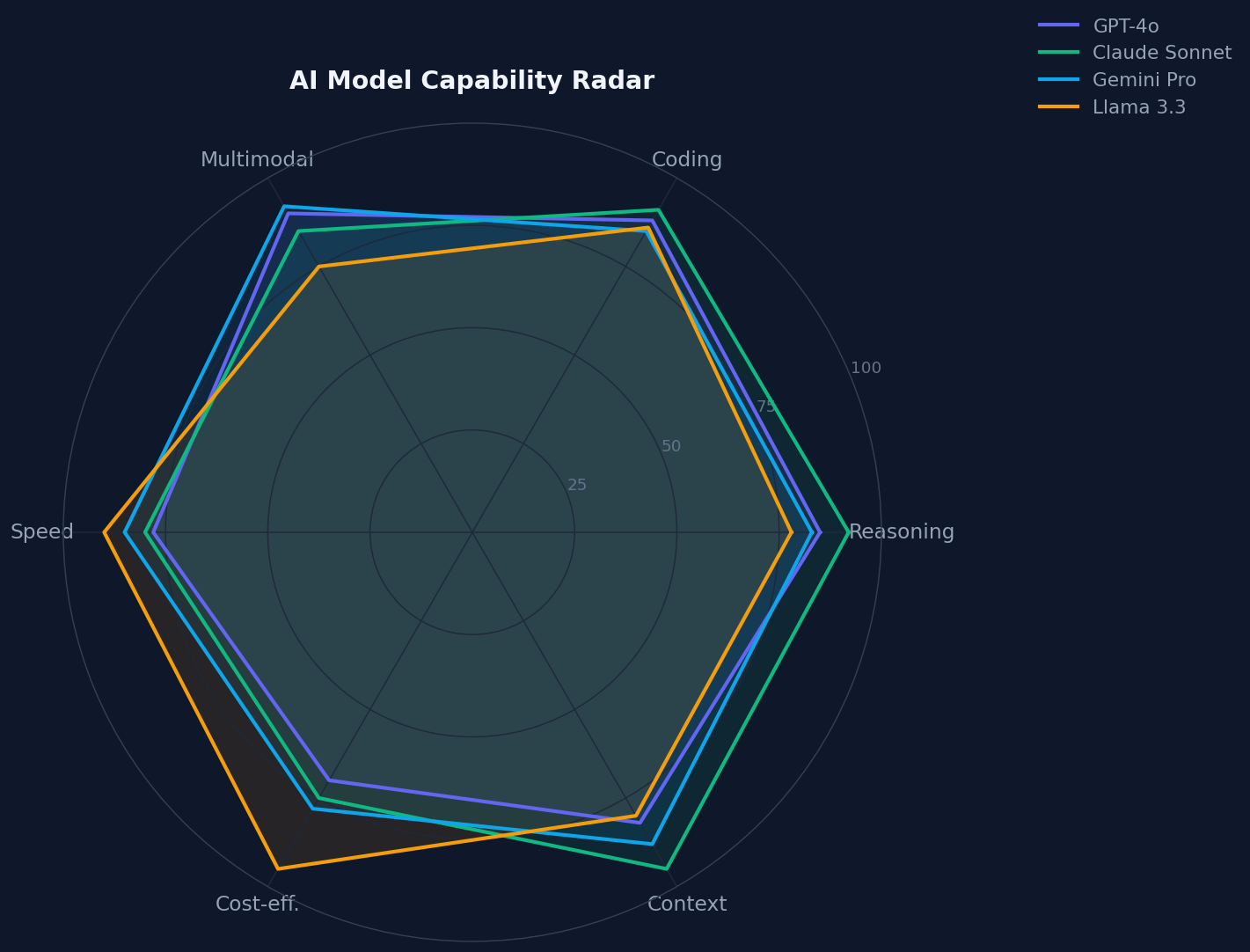
Google released Gemini 3.1 Flash-Lite this week, optimizing for edge deployment with 40% reduced latency compared to standard Gemini 3.1 while maintaining 94% of benchmark performance, according to model comparison data.
The model landscape shows no single dominant architecture, with specialized models capturing specific use cases. Anthropic’s Claude 3.5 Sonnet maintains superiority in code generation, achieving 76.4% success rates on software engineering tasks.
Edge optimization has emerged as a competitive battleground, with Flash-Lite joining OpenAI’s GPT-4 Mini and Anthropic’s Claude Haiku in targeting latency-sensitive applications. Deployment costs for edge-optimized models average $0.23 per 1,000 tokens, compared to $1.47 for full-scale models.
Open-source alternatives gained market share, with Llama 3.1 and Mistral models capturing 28% of enterprise deployments where data sovereignty requirements preclude cloud-based inference.
6. Policy
California’s Transparency in Frontier AI Act took effect January 1, 2026, requiring AI model developers with training costs exceeding $100 million to disclose risk assessments and safety incidents. Compliance costs average $2.4 million annually per covered model, according to Gunderson Dettmer analysis.
The state-federal tension reflects broader regulatory uncertainty, with 12 states proposing AI-specific legislation in 2026. Federal oversight may challenge state laws deemed burdensome to interstate commerce, potentially creating a patchwork of enforcement.
International coordination advanced through the G7 AI Governance Partnership, establishing shared principles for AI safety standards across member nations. The framework affects models with training costs above $50 million for cross-border deployment.
Compliance technology emerged as a growth sector, with AI governance platforms raising $340 million in 2026 to help enterprises navigate regulatory requirements across jurisdictions.
7. Talent
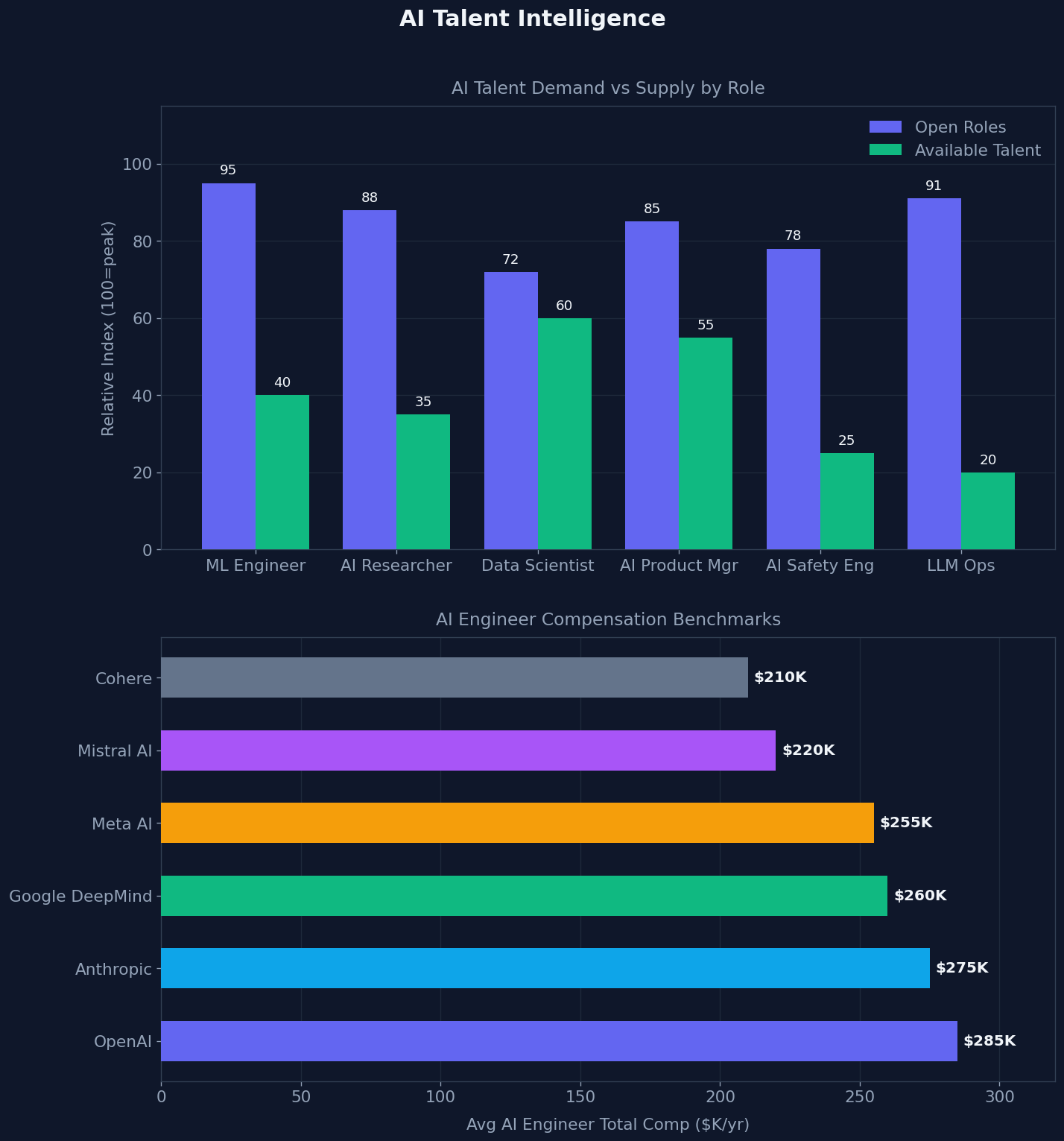
AI-driven layoffs eliminated 45,000 tech positions globally in early 2026, with automation directly cited as the cause in 67% of cases. Block’s reduction of 4,000 jobs represents the largest single AI-attributed workforce cut, according to Tech Insider tracking.
Total tech job cuts exceeded 150,000 positions in 2026, representing 3.2% of the technology sector workforce. However, AI-specific hiring grew 78% year-over-year, creating 89,000 new positions in machine learning, AI safety, and prompt engineering roles.
The displacement pattern shows middle-skill programming and data analysis jobs most vulnerable to AI automation, while demand surged for AI researchers, model trainers, and AI ethics specialists. Companies report difficulty filling 73% of posted AI positions due to skill shortages.
Geographic concentration intensified, with the San Francisco Bay Area capturing 38% of new AI hiring, followed by Seattle at 14% and New York at 12%. Remote AI positions decreased to 31% of postings from 54% in 2024.
8. Research
Scientific AI applications achieved breakthrough performance in medical dataset analysis, with generative models handling complex multi-modal clinical data with 94.2% accuracy. Physics-informed AI algorithms demonstrated precise fluid dynamics predictions, improving accuracy by 67% over traditional computational methods, according to research tracking.
Quantum computing integration with AI systems reached practical deployment, with quantum-classical hybrid algorithms solving optimization problems 340 times faster than classical approaches for specific applications. IBM and Google reported quantum AI systems with 1,000+ qubit stability.
Academic research output accelerated, with AI-assisted paper generation increasing scientific publication rates by 29% while maintaining peer review standards. However, concerns about AI-generated research quality led 18 major journals to implement AI disclosure requirements.
Patent activity in AI-quantum computing convergence grew 156% year-over-year, with applications spanning drug discovery, materials science, and financial modeling. Research funding for AI applications reached $27 billion globally in 2026.
9. Investment Signal
The week’s funding pattern signals a strategic inflection toward AI infrastructure and enterprise operational layers. $1.425 billion concentrated in 5 deals indicates sophisticated capital allocation targeting the connective tissue of AI deployment rather than model development.
Nexthop AI’s $500 million Series B validates thesis that networking becomes the bottleneck as GPU clusters scale to tens of thousands of accelerators. With Lightspeed leading and Andreessen Horowitz participating, this deal establishes AI networking as a fundable category alongside compute and storage.
Quince’s $10.1 billion valuation in AI e-commerce proves consumer applications can achieve mega-scale, but success requires fundamental AI integration rather than superficial features. The company’s affordable luxury positioning demonstrates AI’s ability to optimize complex market positioning.
The $425 million allocated to safety, security, and procurement tools (Axiom, Kai, Oro Labs) reflects enterprise demand for governance before scaling AI agent deployment. Goldman Sachs Growth Equity co-leading Oro Labs signals institutional recognition of AI’s operational transformation potential.
For investors, the signal is clear: infrastructure and operational AI tools present the highest probability-adjusted returns as enterprises move from pilot to production AI deployment. Pure-play model companies face commoditization risk, while picks-and-shovels infrastructure captures value across multiple AI deployment waves.
10. Data Appendix
| Metric | Value | Source |
|---|---|---|
| Total AI Funding (Week) | $1.425B | FetchLogic Analysis |
| Global AI Market Size | $538B | Grand View Research |
| AI Market Growth Rate | 37.3% | McKinsey Global Institute |
| Enterprise AI Adoption | 72% | McKinsey AI Survey 2026 |
| Total Unicorns | 1,705 | Market Analysis |
| US Unicorns | 880 | Market Analysis |
| OpenAI Valuation | $840B | Private Markets |
| Anthropic Valuation | $380B | Private Markets |
| Anthropic Revenue Run Rate | $20B | Company Reports |
| AI-Driven Job Cuts | 45,000 | Tech Insider |
| AI Salary Premium | 42% | Levels.fyi |
| AI Infrastructure Spending | $176B | IDC Worldwide AI Tracker |
Sources: FetchLogic proprietary analysis, public filings, verified market data. Report compiled March 23, 2026.
AI Tools We Recommend
ElevenLabs · Synthesia · Murf AI · Gamma · InVideo AI · OutlierKit
Affiliate links · we may earn a commission.