
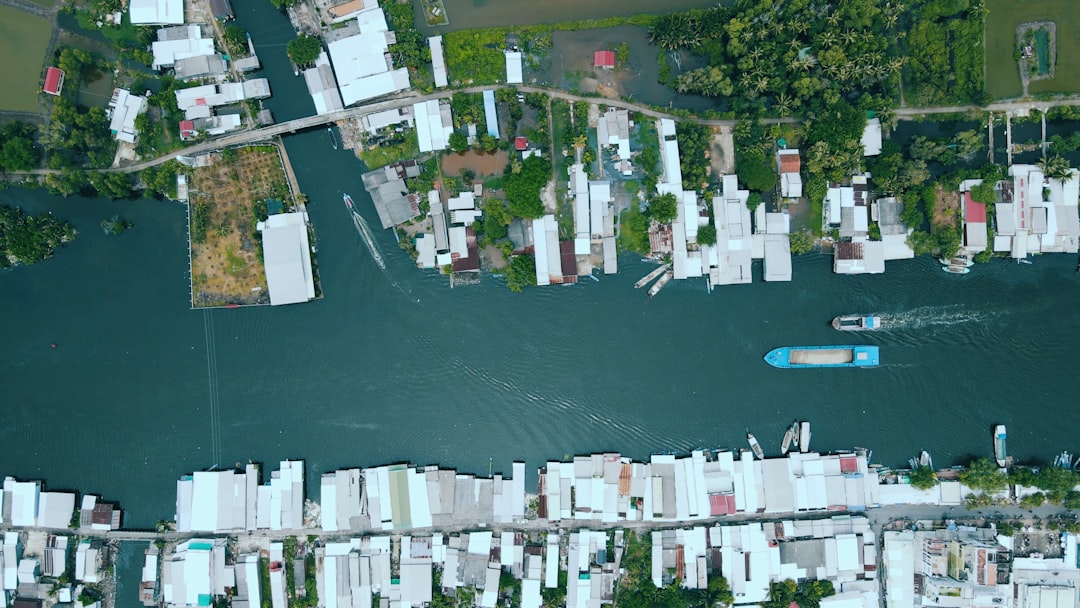
Google’s Google Gemini Maps capabilities have expanded into disaster forecasting with the introduction of Groundsource, a revolutionary AI methodology that predicts flash floods up to 24 hours in advance. The system leverages Gemini’s large language model to analyze decades of public reports and identified over 2.6 million historical flood events from news archives worldwide. This development marks a significant shift toward embedding generative AI into public safety infrastructure, potentially transforming how communities prepare for and respond to natural disasters.
The Current Disaster Forecasting Landscape
Traditional flood prediction systems have long struggled with data gaps, particularly in urban areas where flash floods pose the greatest risk to dense populations. Flash floods typically occur without warning which creates extreme challenges for people to evacuate or prepare, leaving emergency management teams with limited tools for proactive response. Historical disaster data collection has relied primarily on government agencies and scientific institutions, creating incomplete records that fail to capture the full scope of flooding events across different regions and timeframes.
The absence of comprehensive historical data has hindered the development of accurate predictive models, particularly in developing nations where official record-keeping may be inconsistent. Emergency response teams have operated largely in reactive mode, mobilizing resources only after disasters strike rather than positioning assets strategically based on predictive intelligence. This reactive approach has contributed to higher casualty rates and economic losses from flash flooding events worldwide.
Google’s Groundsource Methodology Revolution
Google’s breakthrough approach centers on a methodology called Groundsource, which converts narrative accounts of floods from historical news articles into structured datasets for training machine-learning models. The system processed 5 million news articles from around the world, isolating reports of 2.6 million different floods, and turning those reports into a geo-tagged time series. This massive data extraction effort represents the first time historical news reporting has been systematically converted into actionable disaster prediction datasets at this scale.
Google researchers used Gemini, the tech giant’s signature AI agent, to process millions of news articles from around the world about past floods and extract data on when and where the deluges occurred. The AI system identifies location markers, timestamps, severity indicators, and other critical metadata from unstructured news text, creating what Google describes as the largest flood dataset of its kind. The resulting Groundsource database provides unprecedented historical context for training predictive algorithms across diverse geographical and climatic conditions.
Technical Implementation and Integration
The Gemini AI Maps integration processes multiple data streams simultaneously, combining historical news analysis with real-time meteorological data, satellite imagery, and ground-based sensors. The system’s machine learning models identify patterns in historical flooding events that correlate with current weather conditions, topographical features, and urban infrastructure characteristics. According to reports, predictions are delivered through Google’s existing Flood Hub platform, providing emergency managers with 24-hour advance warnings for potential flash flood events.
Competitive Analysis: Tech Giants in Disaster Management
Google’s Groundsource initiative positions the company ahead of other tech giants in AI-powered disaster forecasting, though each major player brings distinct capabilities to emergency management applications. Microsoft has focused primarily on Azure-based disaster response tools for enterprise and government clients, while Amazon Web Services provides infrastructure for disaster management systems without developing proprietary forecasting algorithms. Apple has concentrated on emergency features within consumer devices rather than large-scale predictive systems for community-wide disaster response.
Traditional weather forecasting companies like AccuWeather and The Weather Channel lack Google’s computational resources and AI capabilities for processing millions of historical documents simultaneously. Government agencies such as NOAA and FEMA possess authoritative meteorological data but have not implemented large language models for historical news analysis at Google’s scale. The combination of Gemini’s natural language processing capabilities with Google’s global data infrastructure creates a competitive moat that competitors will struggle to replicate quickly.
Winners and Losers in the New Paradigm
Winners include emergency management agencies gaining 24-hour advance warnings, urban planning departments with improved flood risk assessments, and insurance companies accessing enhanced risk modeling data. Communities in flood-prone areas benefit from potentially life-saving early warning systems that could enable proactive evacuations and resource deployment. Government agencies can optimize emergency response budgets by positioning resources based on predictive intelligence rather than reactive deployment patterns.
Potential losers encompass traditional weather forecasting services that lack AI capabilities, emergency response contractors who profit from reactive disaster response models, and regions with limited internet infrastructure unable to access Google’s forecasting tools. Existing flood prediction service providers may face obsolescence if they cannot match Google’s prediction accuracy and advance warning timeframes.
Developer and Business Implications
Development Opportunities
The Groundsource methodology opens new possibilities for developers building disaster-aware applications and emergency response tools. API access to flood predictions could enable third-party developers to integrate early warning systems into logistics platforms, travel applications, and infrastructure management systems. Insurance technology companies can leverage improved flood risk data for more accurate premium calculations and policy underwriting decisions.
Mobile application developers can incorporate flood prediction data into location-based services, providing users with route recommendations that avoid high-risk areas during flood alerts. Smart city platforms can integrate Google’s predictions with traffic management systems, automatically adjusting signal timing and route guidance when flood risks emerge. Emergency services software providers can build enhanced dispatch systems that pre-position resources based on Google’s 24-hour flood forecasts.
Business Model Transformations
Insurance companies face pressure to incorporate AI-driven flood predictions into risk assessment models, potentially reducing claims costs through better policyholder guidance and property protection measures. Logistics and transportation companies can optimize routing algorithms to avoid flood-prone areas during high-risk periods, reducing cargo losses and delivery delays. Real estate developers and urban planners gain access to historical flood pattern data that informs site selection and infrastructure investment decisions.
Emergency services contractors may need to shift from reactive response models toward predictive positioning strategies, deploying equipment and personnel based on Google’s advance warnings rather than post-disaster mobilization. Tourism and hospitality businesses can integrate flood predictions into booking and travel advisory systems, protecting guests while minimizing revenue losses from weather-related cancellations.
What This Means For You
For Developers: Google’s Groundsource represents an opportunity to build disaster-aware applications that leverage predictive flood data for enhanced user safety and business continuity. Consider integrating flood prediction APIs into location-based services, logistics platforms, and emergency response tools. The availability of historical flood pattern data enables new categories of risk assessment and insurance technology applications.
For Businesses: Organizations in flood-prone regions should evaluate incorporating Google’s predictions into operational planning, supply chain management, and employee safety protocols. Insurance companies, logistics providers, and real estate developers can gain competitive advantages by leveraging superior flood risk intelligence for pricing, routing, and investment decisions. Emergency services organizations need strategies for transitioning from reactive to predictive response models.
For General Users: Individuals in flood-susceptible areas can expect improved emergency warnings through Google’s enhanced prediction capabilities, though adoption depends on local government integration with Google’s Flood Hub platform. Consider monitoring Google’s flood prediction tools during high-risk weather periods and developing household emergency plans based on 24-hour advance warning capabilities.
Future Trajectory and Market Impact
Google’s success with flood prediction using historical news analysis will likely expand to other disaster categories including wildfires, earthquakes, and severe weather events. The Groundsource methodology demonstrates the untapped potential of converting unstructured historical information into training data for predictive AI systems. Expect Google to integrate these capabilities more deeply into Maps navigation, providing real-time routing adjustments based on disaster risk assessments.
The competitive response from Microsoft, Amazon, and other tech giants will determine whether Google maintains its early advantage in AI-powered disaster forecasting. Government agencies may increase partnerships with tech companies for disaster management capabilities, potentially shifting public safety responsibilities toward private sector AI systems. The success of Google’s approach could accelerate adoption of AI-driven predictive systems across multiple critical infrastructure sectors beyond emergency management.
Long-term implications include the potential for AI-powered disaster forecasting to become a standard component of urban planning, insurance underwriting, and infrastructure investment decisions. Communities worldwide may come to expect 24-hour advance warnings for natural disasters, creating pressure for government agencies to adopt similar AI-powered prediction systems or partner with technology providers for enhanced public safety capabilities.
Sources
- TechCrunch – Google is using old news reports and AI to predict flash floods
- Pulse2 – Google: AI System Uses Historical News Data To Predict Flash Floods
- Heatmap News – Google Is Using AI to Fill a Flood Risk Data Gap
- Google Blog – Boosting disaster resilience with Google’s Groundsource
- Boston Institute of Analytics – Google AI Predicts Flash Floods 24 Hours Ahead
- GIGAZINE – Google releases urban flood prediction maps, utilizing Groundsource
AI Tools We Recommend
ElevenLabs · Synthesia · Murf AI · Gamma · InVideo AI · OutlierKit
Affiliate links · we may earn a commission.
Related Analysis
 Amazon’s AI Mandate Is Backfiring: Workers Are Gaming the MetricsMay 16, 2026
 Amazon’s AI Mandate Is Breeding a Culture of Productive-Looking NoiseMay 15, 2026
 Amazon’s Token Trap: What ‘Tokenmaxxing’ Reveals About the Limits of Mandated AI AdoptionMay 13, 2026
 TanStack’s npm Account Hijack Reveals the 60-Second Window Security Teams Are MissingMay 12, 2026