
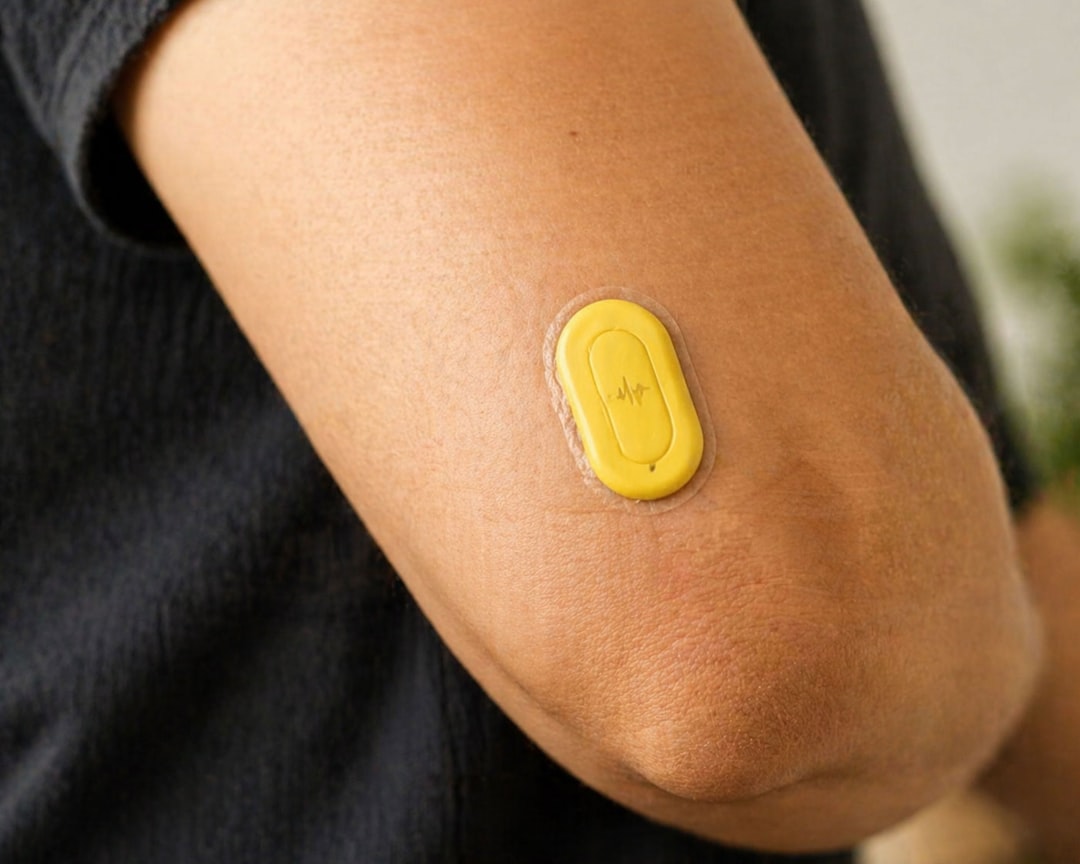
Twenty-seven thousand queries. One person. One meal-planning task that, if answered wrong, can send blood glucose into a crisis. The answers came back different every time — not subtly different, not within a rounding margin, but inconsistently, unpredictably, unreliably different. No human dietitian with that caseload would survive their first malpractice review. The AI faced no review at all.
The 27,000-Query Stress Test That the Industry Would Rather Not Discuss
A person managing diabetes ran a single, repeatable experiment: ask AI systems to count carbohydrates in described meals, then ask again, then again. Across 27,000 iterations, the outputs varied without a discernible pattern tied to input complexity. The same bowl of oatmeal could yield answers separated by enough grams to shift an insulin dose from therapeutic to dangerous. For a Type 1 diabetic, where roughly 10 grams of carbohydrates can correspond to a full unit of insulin, that variance is not a software quirk. It is a clinical event waiting to happen.
The AI industry’s standard defense — that these tools are decision-support, not decision-makers — collapses under that arithmetic. When a person already managing cognitive load, fatigue, and the psychological weight of a chronic condition reaches for an AI tool, they are not performing a research exercise. They are making a real-time call. Research published in the New England Journal of Medicine has documented how cognitive burden in chronic disease management directly degrades decision quality — which is precisely the condition under which AI reliability matters most, and where inconsistency causes the most harm.
Why Carb Counting Is the Canary, Not the Coal Mine
Carbohydrate estimation sounds mundane. It is not. It sits at the intersection of nutritional biochemistry, portion psychology, and real-time glycemic management — a domain where even trained dietitians disagree by 20 to 30 percent on visual estimation, according to studies in clinical nutrition literature. The AI was not being asked to diagnose cancer. It was being asked to count carbs in a meal. That it could not do so consistently across 27,000 attempts is a stress-test result, not an anecdote.
But the significance radiates outward. If an AI system cannot stabilize its output on a bounded, well-defined nutritional query — one with decades of reference data, standardized food databases, and no ambiguity about what “a cup of rice” means volumetrically — the case for trusting it on open-ended clinical reasoning becomes difficult to construct. The FDA’s framework for AI-enabled medical devices requires demonstrated analytical validation and real-world performance monitoring precisely because output variance in clinical contexts is not an acceptable product attribute. Most consumer AI tools operating in health-adjacent spaces have not cleared that bar.
What the Variance Actually Looks Like at Scale
| Dimension | Human Dietitian | Consumer AI (observed behavior) |
|---|---|---|
| Consistency across repeated identical queries | High — trained estimation anchors to reference ranges | Low — output varies without input change |
| Accountability mechanism | Licensure, malpractice liability, professional review | Terms of service disclaimers; no clinical oversight |
| Regulatory classification | Licensed healthcare professional | Typically unclassified or general-purpose software |
| Error consequence awareness | Trained to flag high-stakes uncertainty | Presents all outputs with uniform confidence |
| Query volume sustainable without drift | Bounded by human fatigue; documented in caseload standards | Unlimited volume; consistency does not improve with scale |
The table above is not an argument against AI in healthcare. It is a precision instrument for identifying where the gap actually lives. The problem is not capability in aggregate — AI systems have demonstrated radiologist-level performance on specific imaging tasks in controlled research settings. The problem is AI reliability under the messy, repetitive, high-stakes conditions of daily disease management, where the same question gets asked Tuesday and Thursday and the answer needs to be the same.
The Confidence Display Problem Is Doing Real Damage
There is a specific failure mode that the 27,000-query experiment makes visible, and it is more insidious than the variance itself: every answer arrived with equivalent confidence. The AI did not hedge more on harder questions. It did not flag when its answer differed from a prior response. It did not say “this estimate carries more uncertainty than usual.” It simply answered, with the same tone, the same presentation, the same implied authority — whether the answer was accurate or 40 percent off.
“The dangerous gap isn’t between what AI knows and what clinicians know. It’s between what AI signals it knows and what it actually knows.”
That calibration failure is now drawing regulatory attention. The European Union’s AI Act, which entered into force in 2024, classifies AI systems used in health decision-support as high-risk, requiring conformity assessments and transparency obligations. The United States has moved more slowly — the Office of the National Coordinator for Health Information Technology has published AI frameworks but enforcement mechanisms remain nascent. In the absence of hard guardrails, the market defaults to shipping confidence and disclaiming liability.
If You Are Building on Top of These Models, This Is Your Problem Too
Here is the part the developer community tends to skip past: AI reliability degradation does not stay contained in the consumer layer. Startups building diabetes management apps, nutrition tracking platforms, and chronic disease coaching tools are frequently calling the same foundation models that produced 27,000 inconsistent carb counts. They are wrapping those calls in product interfaces that strip away whatever epistemic humility the underlying model occasionally surfaces, and they are distributing the result to patients who have no way to audit the variance. The liability chain is opaque. The harm chain is not.
Investors pricing health-AI companies at revenue multiples that assume clinical-grade utility should be asking a pointed question: has the underlying model been validated against the specific task the product claims to perform, and across what query volume? The answer, more often than the pitch deck implies, is no. A 2023 analysis by researchers at Stanford and UCSF found that fewer than 5 percent of published AI health tools had undergone prospective clinical validation before reaching end users — a figure that suggests the 27,000-query experiment is not an outlier. It is a representative sample of what is already deployed.
The Gap Between Research Performance and Real-World Deployment
Academic benchmarks are partly responsible for the confusion. When a model achieves 94 percent accuracy on a curated radiology dataset, or passes the USMLE at physician-level scores, those results are real — and they are also produced under conditions that bear limited resemblance to operational deployment. Curated datasets do not have portion-size ambiguity. Standardized exams do not have patients asking the same question seventeen different ways across seventeen different days. A JAMA study evaluating AI diagnostic performance found substantial performance drops when models moved from benchmark datasets to real clinical environments — drops that the benchmark numbers, cited in fundraising materials and press releases, did not predict.
The 27,000-query experiment is valuable precisely because it mimics real-world deployment conditions: same user, same tool, repeated use over time, with the kind of repetitive query pattern that chronic disease management actually produces. That is not a research protocol. That is a Tuesday.
What Genuine Progress Looks Like — and How Far Away It Is
The companies best positioned to close the AI reliability gap in healthcare are not the general-purpose model providers. They are the ones doing something unglamorous: building narrow, validated, task-specific systems with documented performance floors, integrated uncertainty quantification, and regulatory pathways that treat the FDA or equivalent bodies as design partners rather than post-launch obstacles. That work takes three to five years of clinical iteration. It does not produce demo videos that go viral. It also does not produce 27,000 inconsistent answers.
The timeline matters. The diabetes technology market was valued at approximately $23 billion globally in 2023 and is projected to reach $45 billion by 2030. That growth curve will attract AI integration at a pace that clinical validation cannot match if the industry defaults to move-fast norms. The 27,000-query finding is not a scandal requiring a news cycle. It is a measurement requiring a structural response — from developers who need to narrow their task scope, from investors who need to demand validation evidence, and from regulators who need enforcement mechanisms with teeth before the market scales past the point where retrofitting standards becomes politically and economically impossible.
FetchLogic Take
Within 24 months, at least one major consumer AI health platform will face a documented adverse event linked to output inconsistency on a nutritional or medication-adjacent query — and that event will trigger the first successful tort claim in which AI reliability variance, not just AI error, is the named cause of action. The legal distinction between “wrong answer” and “unpredictably inconsistent answer” will matter enormously, and the industry is not ready for it. The 27,000-query dataset is the kind of evidence that plaintiffs’ attorneys bookmark.
Related Analysis
 The Patient Who Wasn’t in the Room: Who Bears the Cost When AI Medical Diagnosis Outperforms DoctorsMay 3, 2026
 Spotify’s ‘Verified Human’ Badge Bets on an Assumption That May Not HoldMay 2, 2026
 AI Data Centers Use 25% Less Water Than Utilities Admit-Here’s Why the Narrative MattersMay 2, 2026Anthropic’s Kill Switch: How Claude Code Now Blocks Competitors by NameMay 1, 2026