
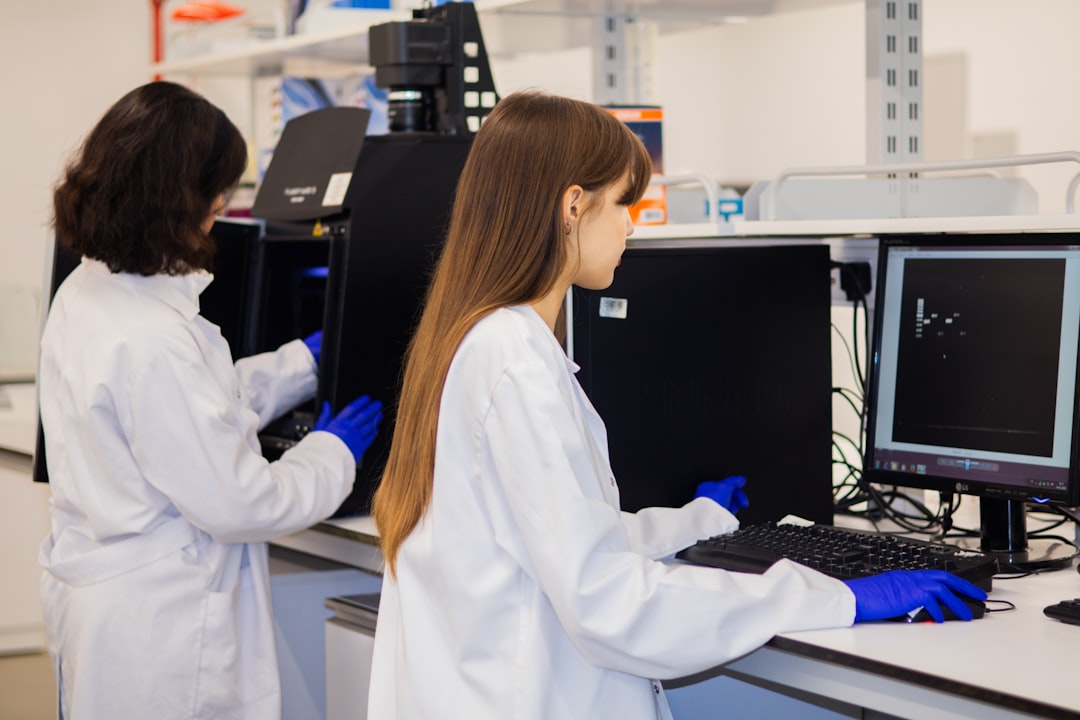
At 2:47 a.m. on a Tuesday in early 2026, a protein-folding model running on a university cluster in Zurich flagged a previously uncharacterized binding site on a bacterial enzyme linked to antibiotic resistance. No human was awake to see it. The system filed its finding, cross-referenced it against twelve public databases, and drafted a hypothesis summary before the lead researcher arrived for her morning coffee. The discovery — if it holds through peer review — would have taken a traditional lab team six months of targeted screening. The model did it as a byproduct of overnight compute cycles allocated to a broader materials-science task.
That vignette, drawn from a broader class of AI-assisted research now being documented across academic institutions, captures something essential about where AI breakthroughs in 2026 actually live: not in a single dramatic demonstration, but in the compounding, often quiet accumulation of capabilities that are quietly reordering what scientific inquiry looks like. The question for researchers is no longer whether AI can assist — it is whether institutions are structurally ready to absorb what AI is now capable of generating.
Reasoning Is No Longer a Party Trick
The most consequential shift in the current generation of AI systems is the maturation of chain-of-thought and extended-reasoning architectures. Earlier large language models produced plausible-sounding outputs; the latest generation produces auditable inference chains. Researchers can now examine, step by step, how a model arrived at a conclusion — a property that matters enormously for scientific credibility and for identifying where models hallucinate versus where they genuinely extend knowledge.
Microsoft’s research team identifies reasoning enhancement as one of its seven core trends to watch in 2026, specifically noting that models trained with reinforcement learning from verifiable outcomes — mathematical proofs, code execution results, logic puzzles — are generalizing that rigor into softer domains. The limitation worth stating plainly: this generalization is inconsistent. A model that reasons impeccably through symbolic logic may still confabulate in domains where ground-truth verification signals are sparse, such as historical interpretation or speculative biology. Practitioners deploying reasoning models in production pipelines should build verification scaffolding, not assume the model’s confidence correlates with correctness.
Multimodal Foundation Models: The Unification Thesis Gets Empirical
For several years, “multimodal AI” described systems stitched together from specialist components — a vision encoder bolted to a language decoder, essentially. The Stanford HAI expert panel for 2026 draws a sharp distinction between those legacy architectures and the true multimodal foundation models now emerging, which are trained jointly across modalities from the ground up. The difference is not cosmetic. Joint training produces representations where visual, textual, audio, and structured-data signals inform each other during learning — not merely at inference time.
The research implications are significant. In radiology, models trained jointly on imaging and clinical notes outperform those trained on either modality separately, because the model learns correlations between visual pathology patterns and linguistic descriptions of symptoms that neither modality encodes alone. In materials science, the same principle applies to spectroscopic data paired with experimental logs. The methodology shift here is from pipeline architecture (modular, interpretable, brittle at seams) to end-to-end joint representation (less interpretable internally, more robust at task boundaries). That tradeoff is where active research debate currently sits.
“The question is not whether AI can process multiple data types — nearly every commercial system does that now. The question is whether the representations learned across modalities are genuinely unified or merely translated. That distinction will determine which systems are scientifically useful and which are expensive autocomplete.”
— Composite of perspectives from Stanford HAI faculty, 2026 predictions roundtable
Open Source Closes the Gap — But Opens New Fault Lines
One of the more consequential structural developments in the current AI breakthroughs cycle is the rapid compression of the capability gap between frontier proprietary models and openly available alternatives. Models released under open or open-ish licenses — Meta’s Llama lineage, Mistral’s releases, and a growing cohort of academic models — are now within measurable distance of closed systems on standard benchmarks, and in some narrow domains, ahead of them.
For academic researchers, this matters in ways that go beyond cost. Open weights enable mechanistic interpretability research that is simply impossible on API-only systems. They permit fine-tuning on sensitive datasets that cannot leave institutional infrastructure. They allow reproducibility — the bedrock of scientific credibility — in a way that a proprietary API call fundamentally cannot. Industry analysts tracking breakthrough AI technologies for 2026 flag open-source convergence as a force multiplier for research institutions specifically.
The fault lines are real, however. Open weights are not the same as open training data, open evaluation methodology, or open safety documentation. A model can be technically open and epistemically opaque. Researchers relying on open-source systems for scientific work should treat the absence of training data disclosure as a methodological limitation — one that belongs in the limitations section of any paper, just as a proprietary dataset would.
For investors monitoring this space, the open-source momentum creates a specific strategic pressure on companies whose moat is model capability alone. The defensible positions are shifting toward data exclusivity, fine-tuning infrastructure, deployment tooling, and vertical integration — not raw model performance. The capability commoditization thesis, once a fringe view, is becoming consensus among serious capital allocators in enterprise AI.
Agentic Systems: From Assistants to Autonomous Research Collaborators
The Zurich enzyme discovery described in the opening paragraph was not a one-off. It reflects an architectural pattern — agentic AI systems that plan, execute multi-step workflows, call external tools, and iterate based on intermediate results — that is moving rapidly from research demo to deployed infrastructure. Microsoft explicitly frames agentic AI as among the defining AI breakthroughs shaping 2026, noting that agent frameworks are enabling workflows that span hours or days of continuous operation rather than single inference calls.
The methodology question for researchers is non-trivial: when an agentic system generates a hypothesis, which parts of the scientific process has AI actually performed, and which has it simulated? A system that retrieves papers, synthesizes findings, and drafts a hypothesis is doing something materially different from a system that designs and executes an experiment. The field has not yet converged on disclosure norms, attribution standards, or peer-review protocols for AI-assisted research at the agentic level. Graduate students and early-career researchers navigating this landscape should treat the absence of such norms as both a risk and an opportunity — the norms being written now will be the field’s infrastructure for the next decade.
How the Leading Capability Vectors Compare
| Capability Domain | Current Maturity (2026) | Primary Research Application | Key Limitation | Investment Signal |
|---|---|---|---|---|
| Extended Reasoning | High (symbolic/formal domains); Moderate (open-ended) | Mathematical proof assistance, code verification, logical inference chains | Confidence does not reliably track correctness in low-signal domains | Strong — underpins enterprise workflow automation |
| True Multimodal Foundation Models | Early-mature; joint training becoming standard | Medical imaging + clinical text; materials characterization | Interpretability of cross-modal representations remains limited | High — differentiates health, materials, defense verticals |
| Open-Source Frontier Models | Rapidly closing gap with proprietary systems | Reproducible research, fine-tuning on sensitive data, interpretability studies | Training data opacity limits scientific disclosure standards | Moderate — pressure on capability-only moats; opportunity in tooling |
| Agentic AI Systems | Deployment-stage in tech industry; early in academia | Literature synthesis, hypothesis generation, automated experiment design | No established attribution, disclosure, or peer-review norms | High — infrastructure layer for AI-native research organizations |
The Scientific Method Is Not Immune to What’s Coming
There is a tendency in research communities to treat AI as an accelerant — something that does what scientists already do, only faster. The more accurate framing, supported by the pattern of discoveries AI systems made in 2026, is that AI is beginning to identify questions that human researchers would not have known to ask. The enzyme binding-site example is one instance. AI-generated hypotheses in climate modeling, drug-target interaction, and quantum materials have each surfaced structures or relationships that fell outside existing theoretical frameworks.
This is not mystical. It is a consequence of scale: systems trained on the full corpus of scientific literature, combined with the ability to run combinatorial hypothesis generation across that corpus, will statistically surface low-probability but high-value connections that human researchers — bounded by time, prior knowledge, and cognitive availability — would miss. The scientific method is not threatened by this. It is, however, being asked to extend itself: to develop evaluation frameworks for AI-generated hypotheses, to create attribution standards for AI co-discovery, and to confront reproducibility questions in a world where the “instrument” generating findings is a statistical model rather than a physical apparatus.
For executives and research directors making resource allocation decisions, the operational implication is direct: institutions that build AI-integrated research infrastructure now — not as a pilot program but as core methodology — will compound their output advantage over the next five years in ways that traditional grant cycles and headcount models cannot match.
FetchLogic Take
The next eighteen months will produce the first serious institutional fracture in academic AI research: a widening divide between universities and labs that have embedded agentic AI into their core research pipelines and those that are still treating it as a supplementary tool. This is not primarily a resource gap — open-source models have neutralized that advantage for most tasks. It is a methodological gap, and it will show up first in publication velocity, then in grant competitiveness, and finally in faculty recruitment. The institutions that move earliest to establish internal norms for AI-assisted research — disclosure standards, attribution protocols, validation pipelines — will not just publish faster. They will define the epistemic rules under which AI breakthroughs get recognized as science. That normative power is worth more, long-term, than any single discovery the models produce.
AI Tools We Recommend
ElevenLabs · Synthesia · Murf AI · Gamma · InVideo AI · OutlierKit
Affiliate links · we may earn a commission.
Related Analysis
 The Benchmark Is the Vulnerability: How AI Agents Are Being Tested to Attack the Real WebApr 12, 2026
 OpenAI Backs Illinois Bill to Cap AI Liability – What It Means for Every Bet You’re Making on AIApr 11, 2026
 The Proof Is in the Problem: What DeepMind’s IMO Result Actually Means for AI ReasoningApr 10, 2026